
Measuring Infrasound: Causes, Effects, and Why Measurement Can Make Sense
Infrasound is caused by both natural sources and technical systems. Although it's often inaudible, it can be perceived as burdensome. Learn what effects infrasound can have, how it's assessed, and how the air-Q supports measurement and analysis.
What is infrasound?
Infrasound refers to sound waves with frequencies below 20 hertz (Hz). These frequencies lie below the typical human hearing range and are therefore often not perceived as a classic sound. Nevertheless, under certain conditions, they can be experienced as a feeling of pressure, vibration, or humming.
Since infrasound and low-frequency sound are often not clearly audible, they remain hard for those affected to categorize. This makes it all the more important to make possible exposure visible through appropriate measurement.
Where does infrasound come from?
Infrasound naturally occurs in our environment. Natural sources include, among others:
- wind and storms
- thunderstorms
- ocean surf
- waterfalls
- earthquakes
- volcanoes
In addition, there are numerous technical sources of infrasound and low-frequency sound:
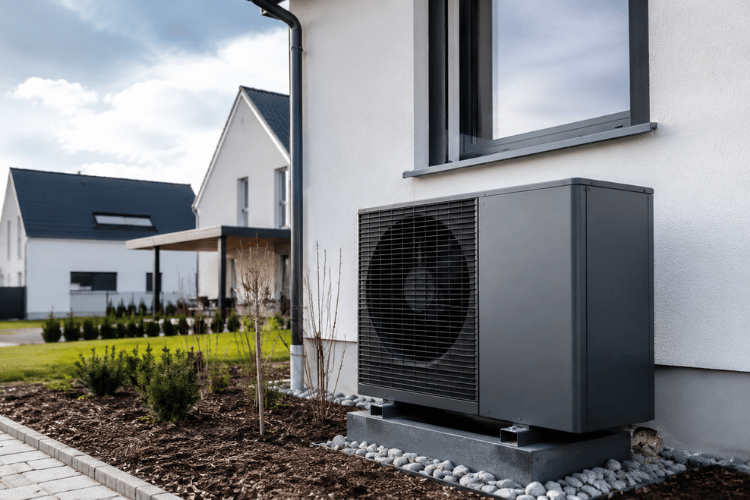
- heat pumps
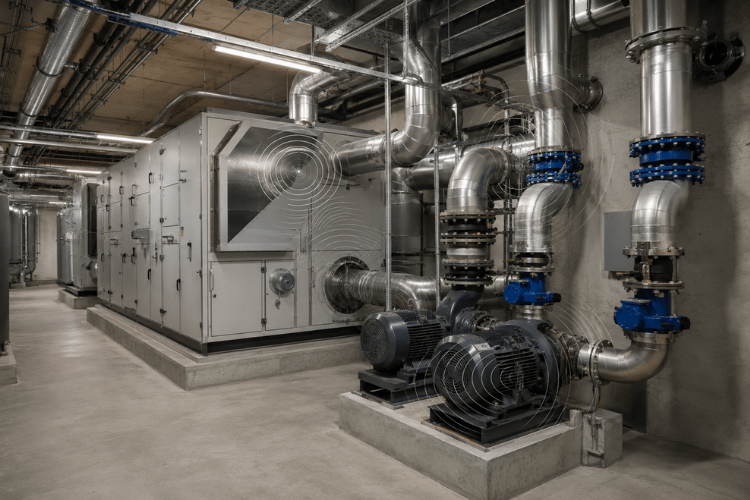
- ventilation and air conditioning systems
- compressors
- transformers
- industrial facilities
- traffic
- aircraft
- loudspeaker systems
- large motors and machines
Building technology or poorly decoupled systems can also generate vibrations and humming noises. Since low frequencies spread comparatively far and can set building components into vibration, corresponding exposure doesn't just occur outdoors. It can also be measurable in living spaces, offices, or technical facilities.
How is infrasound assessed?
Unlike many air pollutants, there's no generally valid limit value for infrasound.
Assessment is frequency-dependent and considers various factors:
- sound pressure level
- frequency spectrum
- exposure duration
- time of day
- measurement location
- ambient conditions
In Germany, low-frequency noise immissions are assessed based on, among other things, the TA Lärm (Technical Instructions on Noise Abatement) and DIN 45680.
A particular challenge is that classic sound level readings in dB(A) only capture low frequencies to a limited extent. This means relevant infrasound components or low-frequency sounds can sometimes be underestimated in conventional measurements. A meaningful assessment therefore requires suitable measurement methods.
What effects can infrasound have?
Infrasound is often associated with health complaints. However, the scientific evidence shows a more nuanced picture.
Based on current knowledge, no confirmed negative health effects have been demonstrated for infrasound levels below the perception threshold.
If infrasound or low-frequency sound is perceived, however, this can be experienced as disturbing or burdensome. Those affected report, for example:
- a feeling of pressure in the room
- humming
- a sense of vibration
- hard-to-locate noises
- vibrations in furniture or building components
With perceptible or higher exposure, the following complaints can also occur:
- concentration problems
- sleep disturbances
- fatigue
- headaches
- discomfort
- stress reactions
At extremely high sound pressure levels, pain while hearing or hearing damage is generally also possible.
Why measurement can make sense
Especially with low-frequency sound, subjective perception is often difficult. Many affected people describe an uncomfortable feeling but can't clearly name the cause.
A measurement helps to:
- objectively capture sound events,
- make patterns over time visible,
- narrow down technical noise sources,
- document anomalies with concrete measurement data.
This is especially helpful when complaints only occur at certain times of day or might be related to heat pumps, ventilation systems, industrial facilities, or traffic.
Measuring infrasound with the air-Q
The air-Q enables continuous capture of infrasound and other environmental parameters. This lets you not only detect sound events and possible exposure, but also analyze them over time.
A particular advantage is that sound measurement can be combined with other environmental data. This lets you investigate possible connections between complaints and factors like
- air pressure,
- temperature,
- humidity,
- CO₂,
- VOCs (volatile organic compounds),
- particulate matter
This creates a more comprehensive picture of ambient conditions than a pure sound measurement.
Conclusion
Infrasound is a natural part of our environment and is also generated by numerous technical systems. Although infrasound is often not directly audible, low-frequency sound events can be perceived as burdensome under certain conditions.
Since assessment is complex and conventional sound measurements often only capture low frequencies to a limited extent, targeted measurement plays an important role. With the air-Q, infrasound, sound events, and other environmental parameters can be continuously captured and analyzed. This allows possible causes of exposure to be better understood, documented, and categorized.