
Working in the Best Light: How to Measure Optimal Workplace Lighting
Is the lighting at your workplace really optimal? The right lighting affects your concentration, productivity, and well-being. German workplace regulations also prescribe certain illuminance levels. Learn now how to easily measure lighting conditions yourself and why measuring light matters.

Why measuring light at the workplace matters
The right lighting has a major effect on health and productivity. Insufficient or overly bright light can quickly strain the eyes and cause headaches, dry eyes, and fatigue. This in turn impairs concentration and performance, which can lead to errors and reduced work quality.
Measuring workplace lighting conditions is recommended
By specifically measuring and adjusting lighting, you can avoid these negative effects and tailor the light to the respective work tasks. Screen work, for example, needs a different light intensity than precise manual work, making individual adjustment essential to ensure both comfort and efficiency.
Optimal lighting values at the workplace
The DIN EN 12464-1 regulation, incorporated into Germany's Technical Rule for Workplaces ASR A3.4, defines clear requirements for illuminance at workplaces. These guidelines are meant to create a safe and efficient work environment by ensuring sufficient light. Workplaces, break and standby rooms, canteens, and accommodations must, as far as possible, receive adequate daylight, or a visual connection to the outside must be ensured. The workplace regulation also mandates adequate artificial lighting — though daylight takes priority. According to regulation BGI 7007, side-incident, non-glaring light is advisable for screen workstations.
The following requirements apply to workplace illuminance:
- Office spaces: an average illuminance of at least 500 lux is required.
- Workshops & labs: values here should range between 750 (technical drawing) and 2,000 lux (engraving work).
- Illuminance must not fall below 300 lux anywhere at the workplace.
- The average vertical illuminance should be appropriate to the visual and work tasks.
- Glare and shadow effects must be avoided.
- Sufficient illuminance must be ensured with adequate uniformity.
Tips for optimizing lighting: choosing bulbs, light color, positioning
Choosing the right bulbs is crucial to achieving optimal lighting. Bulbs with a neutral white light color (3,300 to 5,300 Kelvin) are especially well suited to most work areas, since they mimic daylight and tire the eyes less. The positioning of light sources also plays an important role: avoid glare and ensure even illumination across the entire work area to guarantee optimal working conditions.
Methods for measuring light at the workplace
Measuring lighting conditions at the workplace can be done with a lux meter, a dedicated device for determining illuminance in lux. With a lux meter, you can precisely determine whether light intensity meets the prescribed standards and whether adjustments are needed.
Measuring light at the workplace with the air-Q's light sensor
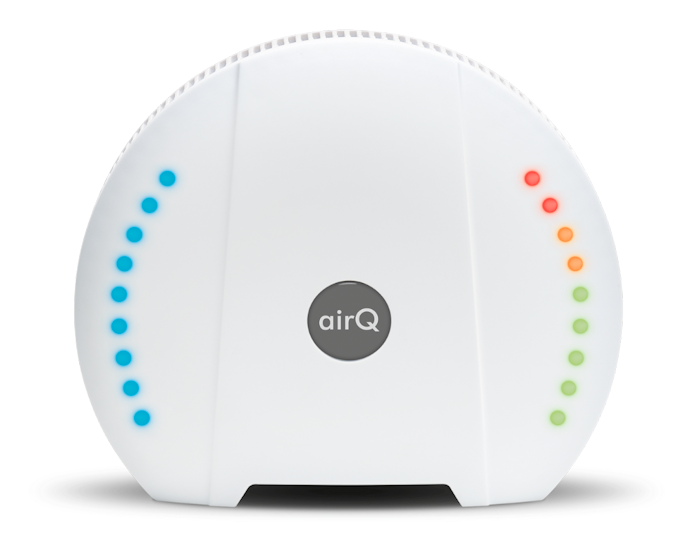
An alternative, more comprehensive method is offered by the air-Q with its new, additional light sensor. You can easily integrate this sensor into the air-Q science air monitor, upgrading your air-Q into a light meter. With the light sensor, you can now check light intensity. To do this, the air-Q captures the brightness of incoming light and converts it into a digital signal. The device only accounts for the light spectrum perceivable by the human eye — infrared and ultraviolet radiation are not considered.
Comprehensive room air analysis at the workplace with the air-Q
Besides illuminance, the air-Q air monitor can measure many other relevant air quality parameters such as oxygen, carbon dioxide, temperature, humidity, noise, and particulate matter pollution. This means the air-Q doesn't just provide important lighting data — it also contributes to a comprehensive analysis of workplace air quality. This lets you ensure all important workplace environment factors comply with occupational safety guidelines and that a healthy work climate is maintained.
In our separate article, learn how the smart air-Q air analyzer helps you meet the standards of the ASR A3.6 guideline.