
Invisible Danger: How the air-Q Detects Gases and Warns Early
Gases in the air are often invisible — and that's exactly why they're so dangerous. Whether in the office, at home, or in an industrial hall: many of these substances go unnoticed, but directly affect our health, our surroundings, or even machines and materials. This is exactly where the air-Q air analyzer comes in.
Why gases pose a risk
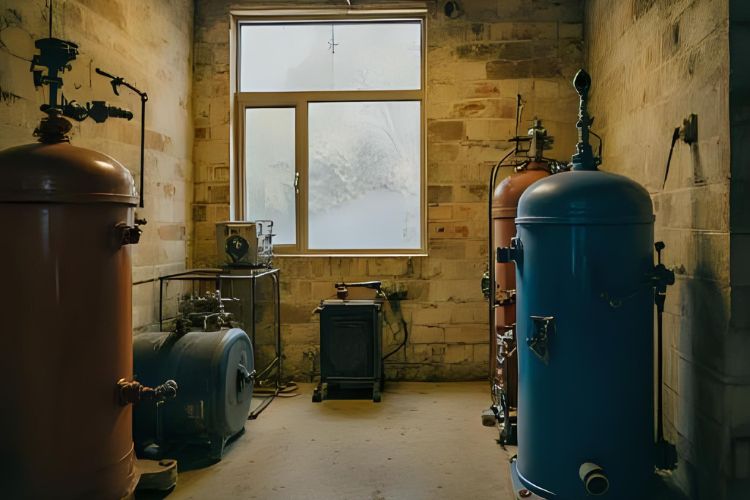
Many dangerous gases are colorless and odorless — we don't notice them, even though they can be right around us. They form, for example, from:
- Heating devices or stoves (carbon monoxide)
- Traffic and industry (nitrogen dioxide, ozone)
- Furniture, paints, and cleaning products (VOC)
- Ground radiation (radon)
The consequences range from irritation to chronic diseases to acute poisoning. This makes it all the more important to keep an eye on these substances not just occasionally, but permanently.
Pellistor vs. air-Q: classic gas sensor technology meets smart air analysis
Pellistors are classic sensors for detecting combustible gases like methane (CH₄), butane (C₄H₁₀), hydrogen (H₂), ethane (C₂H₆), or propane (C₃H₈). They work through catalytic combustion of the gas on a heated sensor — this changes the electrical resistance, which is used to detect the gas. These sensors are especially widespread in industrial applications, but must be verified and regularly calibrated as well as certified to meet standards-compliant safety requirements.
The air-Q goes significantly further: it uses modern, non-combustion sensor technologies — including electrochemical and optical sensors — to reliably detect a wide range of dangerous gases and air components. Unlike a pellistor, the air-Q also responds to toxic gases like carbon monoxide (CO), nitrogen dioxide (NO₂), ozone (O₃), or volatile organic compounds (VOCs) and even radon. But combustible gases like hydrogen (H₂) and methane (CH₄) are also detected by the air-Q.
The precise measurement technology is complemented by an intuitive app, smart alarms, real-time data, historical charts, and comprehensive trend analyses. This makes the air-Q far more than a single gas sensor — it's a complete air analysis and early warning system that protects health, secures property, and draws attention to invisible dangers early.
The air-Q detects what others don't see
With its highly precise sensor technology, the air-Q detects — similar to a pellistor — a wide range of gaseous substances, and warns you in time, before things get critical.
The air-Q analyzes room air in real time — around the clock. Thanks to a wide range of built-in sensors, the device detects more than 14 air components, including:
- Carbon monoxide (CO) — toxic and potentially fatal
- Nitrogen dioxide (NO₂) — an irritant gas from exhaust fumes
- Ozone (O₃) — oxidative, harmful to the lungs and materials
- VOC (volatile organic compounds) — e.g. formaldehyde
- Particulate matter (PM1.0, PM2.5, PM10) — deeply inhalable particles
Readings can be viewed at any time in the air-Q app and the web portal — supplemented by limit-value comparisons, historical charts, and recommended actions.
%2520(300%2520x%2520250%2520px)%2520(1500%2520x%25201300%2520px).jpeg)
Smart alarms — intelligent protection for people and property
What makes the air-Q special isn't just the wide range of gases it detects, but also its ability to trigger intelligent warnings. This means:
- Automatic alarms when limit values are exceeded
- Customizable thresholds depending on the environment
- Warnings via app, email, or acoustic signal
- Integration into building automation or security infrastructure
Especially in businesses and industrial environments, the air-Q can function as an early warning system — for example, in the event of gas leaks, production exhaust, or ventilation problems. Even in private households, it protects against gradual health risks or costly long-term damage to furnishings and the building structure through its real-time monitoring.
Radon: the underestimated danger from the ground
One particularly insidious gas is radon. It enters buildings from the ground through cracks and leaks — and it's radioactive. According to the World Health Organization (WHO), radon is considered the second most common cause of lung cancer after smoking.
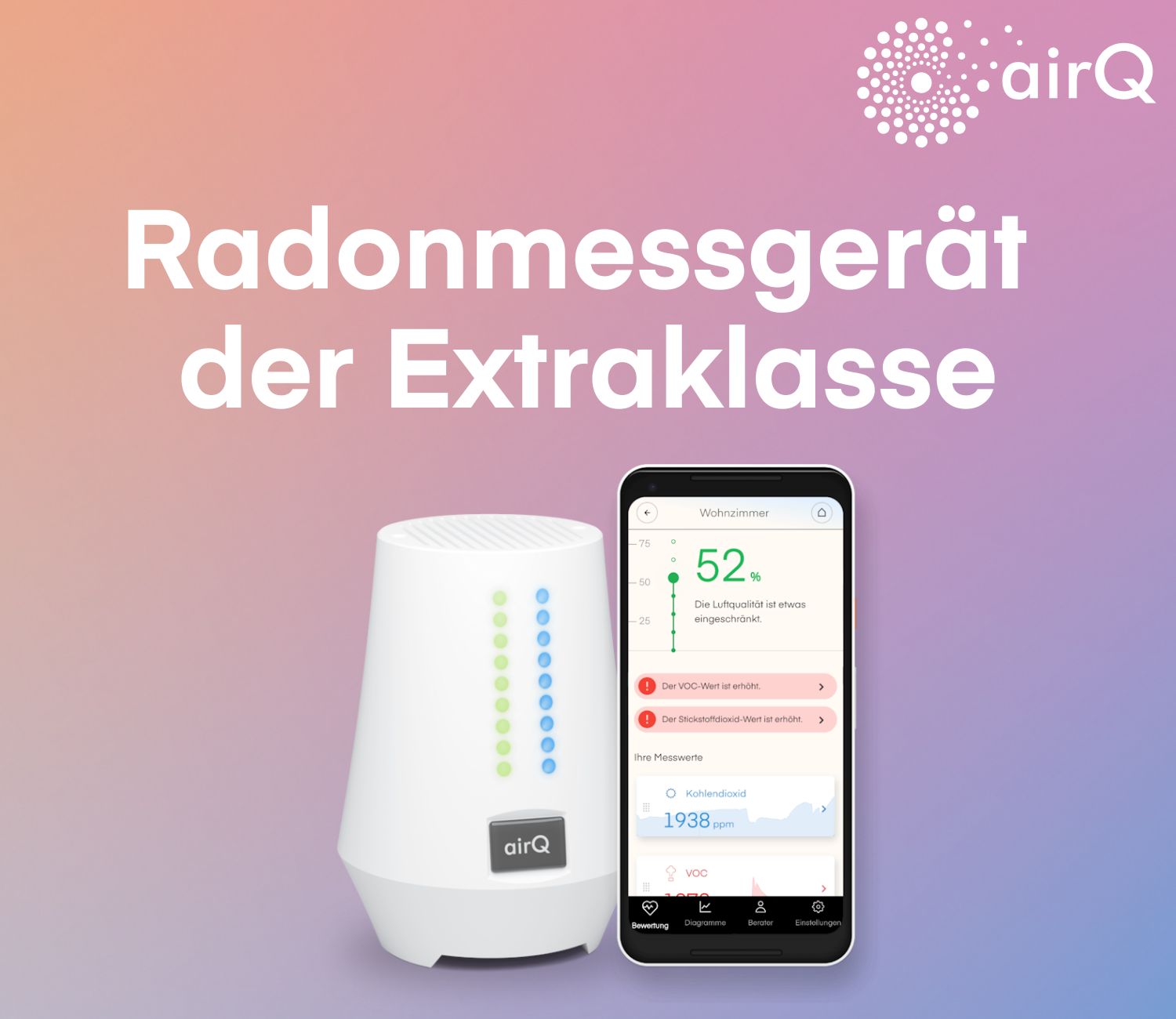
The air-Q Radon was specifically developed to permanently and precisely monitor radon exposure — with no lab or long-term analysis needed. This lets you quickly detect dangerous values and take targeted measures, such as ventilating or structural sealing.
Conclusion: an edge through knowledge — with the air-Q
Whether for private households, businesses, or public institutions: with the air-Q, dangerous gases become visible — and manageable. Its precise sensor technology and intelligent alarm functions make it a true early warning system for the air we breathe every day. This way, it protects not just health and life, but also value and property.