
Humidity in Spring: Why It Still Matters
Especially in spring, humidity often rises unnoticed, which can promote mold formation. This can become a problem especially in the bedroom, living room, and basement. Devices like the air-Q help make relevant values visible and create an ideal indoor climate.

Normal humidity in the home ideally lies between 40% and 60%. Values below that dry out mucous membranes, values above that promote mold formation. In spring, the topic is often underestimated: warm days meet still-cool walls, causing condensation to form.
Room by room - assessing humidity correctly
Bedroom
The bedroom is a common hotspot: bedroom humidity often rises above the recommended range at night due to breathing and sweating.
Tip: Ventilate regularly and monitor the values with a measuring device.
Living room
Moisture also accumulates in the living room from breathing, sweating, plants, or laundry drying in the room. Living room humidity above 60% can promote mold over time. Brief intensive ventilation or targeted heating balances the values out.
Basement and other rooms
Damp basements aren't just a winter issue. In spring, humidity can build up in the basement due to warm outdoor air meeting cool walls. This can create a perfect breeding ground for mold. Keep an eye on humidity here too, especially in rarely used rooms.
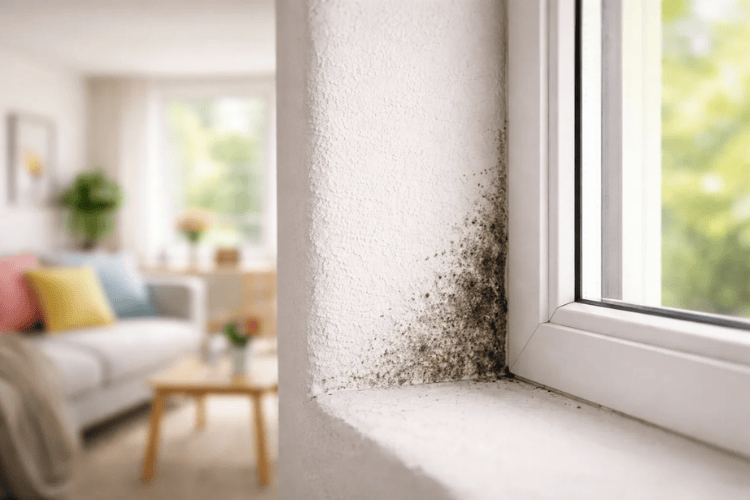
Preventing mold - maintaining ideal humidity
Ideal humidity lies between 40-60%. This way, you avoid mold forming due to humidity. Practical tips:
- Ventilate intensively morning and evening
- Continuously measure humidity with an appropriate meter
- Specifically vent humid air from the kitchen, bathroom, and basement
- Adjust heating to reduce temperature differences
How the air-Q helps keep an eye on humidity
With a meter like the air-Q, you can see at a glance how humidity is developing in your home. The air-Q not only displays current values, but also documents trends over days and weeks. This lets you quickly recognize when humidity could promote mold and when indoor air is too dry. Practical warnings help you ventilate or heat in time, ensuring a healthier indoor climate.
Spring is no break for air quality
Even in spring, humidity that's too high or too low can affect the indoor climate and promote mold. Anyone who regularly measures room humidity ensures a healthy living environment in the bedroom, living room, and basement. Devices like the air-Q make this easy to see and provide concrete recommendations for action.