
How Can You Measure Radon in a House?
Radon is an invisible, odorless, and tasteless noble gas formed by the decay of uranium in the soil. It can enter houses and, at high concentrations, pose a health risk, since it increases the likelihood of lung cancer. But how can you measure radon in a house, and which methods are most effective?

In this post, you'll find the following content:
- What is radon, and why should you measure it?
- How can you measure radon in a house?
- How do you measure radon correctly?
- Measures for elevated radon exposure
- Measuring radon with the air-Q radon air analyzer
- Conclusion
What is radon, and why should you measure it?
Radon (chemical symbol: Rn) forms naturally and can enter a house through cracks in the foundation, pipes, or porous building materials. Regular measurement is especially recommended in regions with high radon potential. Long-term exposure to radon can have significant health consequences, which is why measurement is an essential step in improving living quality. Protect yourself and your family through regular and straightforward radon measurement and always stay on the safe side. The World Health Organization (WHO) recommends a maximum radon concentration of 100 Bq/m³ indoors to keep health risks as low as possible. In Germany, the statutory reference value is 300 Bq/m³. If this value is exceeded, measures should be taken to reduce exposure.
How can you measure radon in a house?
Measuring radon in a house can be done in various ways, depending on whether a short-term or long-term analysis is desired. Below, we introduce the most common methods:
1. Radon detectors for home use
Radon detectors are small devices that can simply be placed in living spaces. These passive monitors usually contain a film that captures radon concentration over several weeks. At the end of the measurement period, the detector is sent to a laboratory that performs the evaluation.
Benefits:
- Easy to use
- Accurate results for long-term measurements (3 to 12 months)
Drawbacks:
- Results only available after the measurement period ends
2. Electronic radon monitors
Electronic monitors provide real-time data and enable continuous monitoring of radon levels. These devices are ideal for people who need quick results or want to check radon concentration regularly.
Benefits:
- Immediate results
- Ability to monitor long-term
Drawbacks:
- Higher purchase cost
- Regular calibration required
3. Professional radon measurement by experts
Another option is to hire a specialist company for radon measurement. Experts use special measurement techniques to determine radon concentration throughout the house and identify risk areas.
Benefits:
- Precise results
- Comprehensive advice and risk analysis
Drawbacks:
- Higher cost
How do you measure radon correctly?
For the measurement to be meaningful, a few basic points should be considered:
- Positioning the monitor: place the device in living spaces or basements, since the highest concentrations often occur there. Avoid placing it directly near windows or ventilation shafts.
- Measurement duration: a long-term measurement over several months is more reliable than a short-term measurement, since it accounts for fluctuations over the course of the day or year.
- Timing: ideally measure during the heating season, since radon concentration is often higher then.
Measures for elevated radon exposure
If the measurement results show a high radon concentration, there are various ways to reduce it:
- Improving ventilation: regular ventilation reduces radon concentration in living spaces.
- Sealing: seal cracks in the foundation or walls to prevent radon from entering.
- Radon wells: in especially exposed areas, installing a radon well can help vent the gas before it even enters the building.
Radon measurement in the basement as an important safety factor
Radon measurement in the basement is a crucial step to ensure safety and health in your home. Since radon can enter buildings from the ground, basements are especially prone to elevated radon levels. Regular radon measurement in the basement helps detect potentially dangerous concentrations early and take appropriate reduction measures. Use reliable radon monitors like our air-Q Radon to get accurate results and effectively monitor radon exposure. Protect your family by regularly checking radon levels in your basement and taking action when needed.
Exclusive tips for your healthy life
Measuring radon with the air-Q radon air analyzer
The air-Q radon air analyzer offers an innovative way to precisely and conveniently measure radon concentration in a house. This advanced device combines several sensors that measure not just radon, but also other air quality parameters like temperature, humidity, and CO₂.
The air-Q radon stands out through:
- Real-time measurements: you get immediate results directly on your smartphone or computer.
- High precision: the specially developed sensors guarantee reliable data on indoor radon exposure.
- User-friendliness: easy to set up and ideal for permanent use monitoring air quality.
- Versatility: besides radon, the air-Q measures numerous other factors crucial for a healthy indoor climate.
With the air-Q radon, you get a comprehensive picture of your indoor air and can take targeted measures if needed. The device is especially suited for people who value both radon and general air quality.
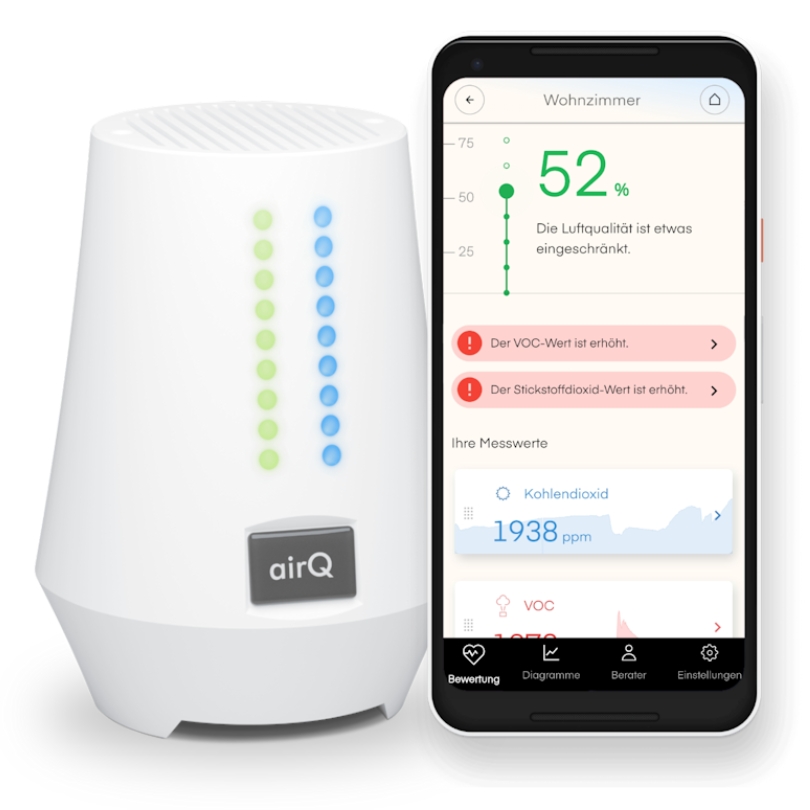
Whether you want to measure radon in a house, want to know how to measure radon, or are looking for a long-term solution: the air-Q radon air analyzer is a smart and convenient choice for a safe and healthy home.
Conclusion
Radon measurement in a house is an important step to protect your family's health and minimize the risk of long-term damage. Whether you want to measure radon in your house, are wondering how to measure radon, or want to seek professional help — there's a suitable solution for every need. Especially in radon risk areas, it's worthwhile to act early and take appropriate measures. But even outside these areas, a building's construction can lead to elevated radon exposure. Also keep in mind that weather can affect indoor radon concentration.
A radon measurement can cost different amounts depending on the method:
- Radon detectors (dosimeters): from about €30–50 per unit, including lab evaluation. These devices sit passively in the room during the measurement period and provide no real-time data or directly readable values. You only get the results after sending the detector to the lab. Several devices are needed for one house.
- Electronic monitors: one-time purchase cost from about €150–300, depending on the model. These devices offer real-time measurements and are ideal for continuous monitoring. Thanks to additional sensors, the air-Q offers, for example, a fully comprehensive air analysis.
- Professional measurement: costs vary widely, but are usually between €300 and €1,000, depending on the scope of the analysis. Drawback: such a measurement is often very short and thus only provides a snapshot, not a comprehensive picture.