
Healthy Room Air: Why Bad Air Happens and What Really Helps
Bad air indoors affects health, concentration, and well-being. With simple measures, room air can be specifically improved by reducing typical causes and minimizing negative effects on body and well-being.
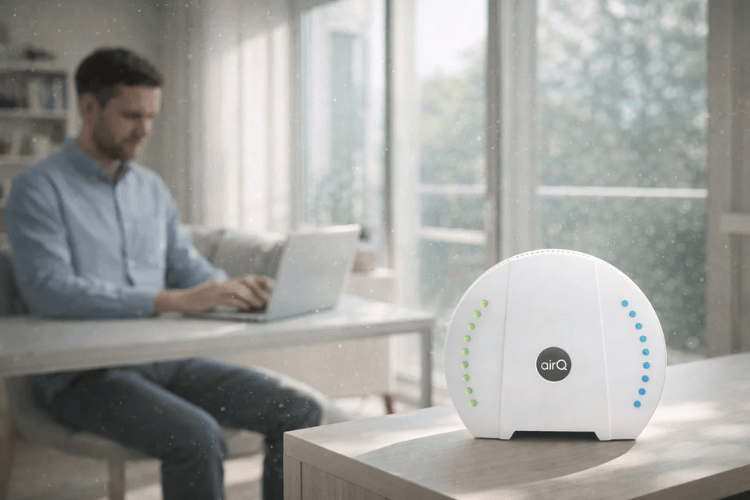
Bad air indoors is a widespread problem. Most people spend many hours a day in enclosed spaces, such as at the office, at school, or at home. Poor room air quality can impair well-being, concentration, and health. To improve indoor air quality, it's important to understand the causes and take targeted measures.
Causes of bad air indoors
One of the most common causes of bad indoor air is insufficient ventilation. In modern buildings, windows and building envelopes are very airtight to save energy. This means stale air stays in the room longer. Carbon dioxide content rises, and fresh oxygen supply is lacking.
Pollutants also burden room air. Furniture, flooring, paints, varnishes, and cleaning products release volatile organic compounds (VOCs). Electronic devices can also contribute to pollution. These substances are often odorless and therefore go unnoticed.
Another factor is particulate matter. It enters indoor spaces through open windows from outdoor air, or forms while cooking, from candles, or while heating. Especially in urban areas, particulate matter pollution can be significantly elevated.
Too high or too low humidity also negatively affects the indoor climate. High humidity promotes mold growth, while very dry air burdens the mucous membranes.
Effects of bad room air
Bad air indoors can show up in various ways. Typical signs are fatigue, headaches, concentration problems, or irritated eyes and airways. Long-term, consistently bad room air can increase the risk of respiratory disease and lower overall well-being.
Since many of these effects appear gradually, the cause is often not directly linked to air quality.
Simple measures to improve air quality
The good news is that indoor air quality can often be improved with simple measures. Regular ventilation is the most important step. Letting in fresh air several times a day reduces carbon dioxide, moisture, and pollutants. Brief burst ventilation is generally more effective than permanently tilted windows.
Behavior in the room also plays a role. Using cleaning products sparingly, avoiding unnecessary fragrances, and being mindful when using candles or incense sticks can reduce pollutant exposure.
Plants can positively affect the indoor climate, even though they're not a complete solution on their own. It also helps to keep an eye on humidity and adjust it as needed, especially during the heating season.
Why does it make sense to measure air quality?
Many types of room air pollution are invisible. Neither carbon dioxide nor particulate matter or volatile pollutants can be reliably detected with your own senses. Anyone judging air quality purely by feel often reacts too late, or not at all.
Measuring air quality creates transparency. Readings show when ventilation is needed, whether pollutant sources are present, and how the indoor climate changes over the day. This lets you take targeted measures to sustainably improve air quality.
Measuring and understanding air quality with the air-Q
The air-Q enables comprehensive indoor air quality measurement. The device captures, among other things, carbon dioxide, particulate matter, volatile organic compounds, temperature, and humidity.
The measured data is displayed clearly and helps you recognize correlations. Users see not just current readings but also long-term trends. This makes visible how ventilation behavior, the presence of people, or certain activities affect room air.
With this information, air quality can be specifically improved. The air-Q makes invisible pollution measurable and helps make indoor spaces healthier, more productive, and more pleasant.