
Fit Through Fresh Air: How Clean Room Air Optimizes Your Gym Workout
Dumbbell training, a personal coach, and protein shakes — what more does a good workout need? Good air! In this article, learn which invisible pollutants lurk in gyms — and how clean air can make the crucial difference for your workout.
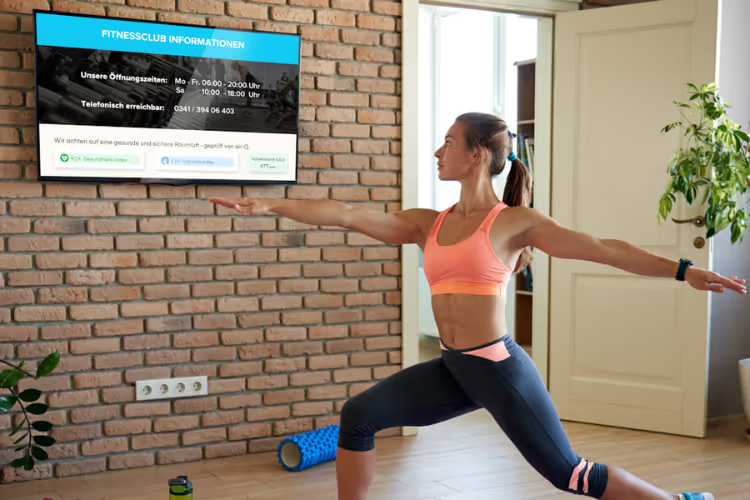
How important is healthy air for working out at the gym?
Picture yourself walking into your gym, full of energy and ready to make the most of your workout. But after a short time, you feel tired, your concentration and strength decline, and the air in the room feels heavy and stuffy. What many don't know: air quality has an enormous effect on your performance, your well-being, and the development of strength and endurance. This is why air composition in a gym plays a crucial role in athletes' performance.
What air pollutants occur in a gym?
Many people associate gyms primarily with physical health, but room air quality is often neglected. In fact, gym air can be polluted by a wide range of pollutants from different sources.
- Carbon dioxide (CO₂): during exercise, people breathe more intensively, which quickly raises CO₂ levels in room air, especially in poorly ventilated gyms. Excessive CO₂ can cause fatigue, concentration difficulties, and headaches, significantly impairing workout performance.
- Volatile organic compounds (VOCs): these pollutants often come from cleaning products or disinfectants. They can also off-gas from rubber flooring and mats. VOCs can cause headaches, irritation of the airways and eyes, and long-term health problems.
- Particulate matter (PM₁₀, PM₂.₅, PM₁): in gyms, particulate matter can be produced by abrasion from training equipment, shoes, or brought in from outdoor air. These particles are especially dangerous since they can penetrate deep into the lungs and cause inflammation.
- Mold spores: mold spores can develop in damp areas like changing rooms or showers. In sensitive individuals, these lead to respiratory problems or allergic reactions.
- Nitrogen oxides (NO₂): if the gym is located near busy roads or uses poorly maintained ventilation systems, nitrogen dioxide exposure can be elevated. NO₂ irritates the airways and can reduce oxygen uptake.
The effect of air quality on your workout
Poor air quality directly affects the workout experience. With elevated CO₂ levels or high pollution from VOCs and particulate matter, not only well-being but also performance declines. Fatigue, headaches, and airway irritation impair athletes' concentration and endurance.
Beyond that, oxygen plays a crucial role in the body's energy production. If the air is polluted, the efficiency of oxygen uptake decreases, so muscles receive less blood flow. Measuring pollutants at home can therefore be worthwhile. This negatively affects the development of strength and endurance. With inadequate air quality, athletes often have to work harder to reach their performance goals, which simultaneously increases the risk of overexertion and exhaustion.
How the air-Q supports your gym workout
The air-Q measures air quality in real time, capturing all relevant parameters such as CO₂, VOCs, particulate matter, and many other air components. With its precise data, gym operators can take targeted measures to improve air quality, for example through optimizing ventilation, needs-based air exchange, or using low-emission cleaning products.
Since the air monitor is smart-home-capable, it delivers important information to connected devices as a sensor hub. This lets gym operators use the air-Q as a signal source for a wide range of applications: for example for automatic window opening, controlling air purifiers, or switching heating on and off. This lets you track how room air develops depending on room use, pollution, or the number of people present, letting operators, trainers, and gym-goers respond situationally.
With air-Q's Smart Widgets, gym-goers can see the gym's air quality
Another decisive advantage of the air-Q is the flexibility of its Smart Widgets. These let you display the measured air quality data on numerous devices and platforms — anywhere an internet connection exists and HTML code can be embedded. Whether on the gym's website, on info screens in reception areas as well as in training and class rooms, or in the changing rooms: the current air readings are visible to everyone. This lets gym members see at any time that they're training in an environment offering the best not just physically, but also in terms of air quality. This transparency builds trust and creates an all-around safe workout experience. It also shows gym members that operators care about their health and optimal training conditions.

Conclusion:
Good air quality in a gym isn't a luxury — it's crucial for health, well-being, and optimal performance. With an air monitor like the air-Q, gym operators can not only reliably monitor pollutants but also make the data directly visible on various devices via Smart Widgets. This creates a transparent, healthy training environment where athletes can breathe easy, achieve their best performance, and reach their goals efficiently.