
Fresh Air Monitor: Why Fresh Room Air Is Measurable
Why good room air isn't a feeling: what a fresh air monitor measures, why fresh air indoors is crucial, and how the air-Q helps make air quality visible and specifically improve it.
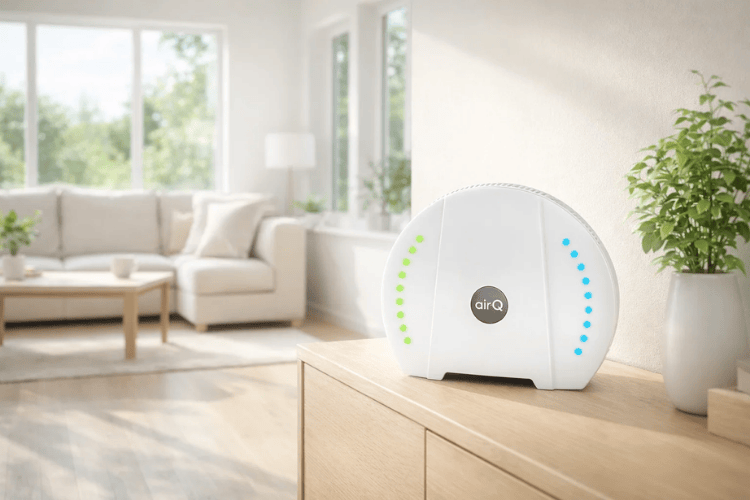
What is a fresh air monitor?
A fresh air monitor is a device for monitoring room air quality. It shows when indoor air is stale and fresh outdoor air is needed. The CO₂ value usually serves as the main indicator, since it reliably reflects how much the air is polluted by people present.
Modern fresh air monitors also capture temperature and humidity. The air-Q goes a step further: besides CO₂, it also measures pollutants such as particulate matter, volatile organic compounds (VOCs), and radon. This gives users a comprehensive picture of their room air quality.
Why fresh air indoors is so important
People spend most of their day in enclosed spaces. Without adequate fresh air, CO₂, moisture, and pollutants often build up unnoticed. The consequences range from concentration problems to fatigue to health burdens.
A fresh air monitor makes visible when you should ventilate. Devices like the air-Q additionally help determine whether bad air is due solely to a lack of fresh air, or whether other pollution is present that simple ventilation won't remove.
Why fresh room air should be measurable
Fresh air isn't a feeling you randomly perceive. Bad room air is often only noticed once concentration and well-being are already suffering. A fresh air monitor makes the air measurable and provides objective data.
With a measuring device like the air-Q, not only CO₂ spikes can be detected, but also other pollution affecting health and comfort. Measurable readings create transparency and give clear recommendations for action: open the window, turn on ventilation, or take further measures.
What does a fresh air monitor actually measure?
A fresh air monitor doesn't directly measure "fresh air," but rather signs of its absence. Typical readings are:
- CO₂: as the central indicator of stale air
- Temperature: important for comfort and indoor climate
- Humidity: a factor in well-being and mold risk
The air-Q expands these measurements to include pollutants such as particulate matter, VOCs, radon, and more. This means the device doesn't just show when to ventilate, but also why the air is polluted.

Is a CO₂ monitor enough?
A simple CO₂ monitor can help identify when to ventilate. It doesn't, however, provide information about other pollutants or chemical burdens that also affect air quality.
A fresh air monitor like the air-Q enables a more differentiated assessment. Users can identify causes instead of just reacting to a single reading.
Who benefits most from a fresh air monitor?
A fresh air monitor is especially useful for:
- Offices and conference rooms
- Schools, daycare centers, and educational institutions
- Living spaces and bedrooms
- Home office workspaces
Anyone who wants to know not just when to ventilate, but also why the air is polluted, benefits from a holistic device like the air-Q.
Fresh air isn't a feeling — it's a reading
A fresh air monitor creates clarity about room air quality. It replaces gut feeling with measurable data and helps you ventilate in a targeted way. The air-Q goes a step further: it reveals which factors are polluting the air and shows when ventilation alone isn't enough.
Good room air doesn't happen by chance. It can be measured, assessed, and specifically improved.