
Euro 2024: How Much CO₂ Football Fans Produce in the Stadium
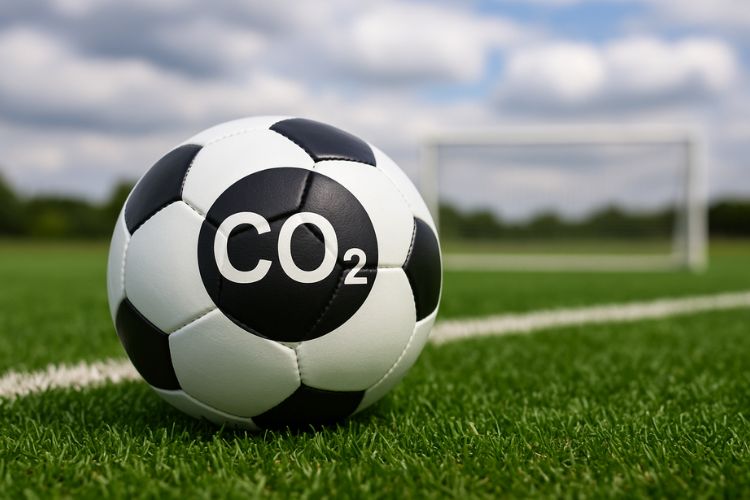
The national team plays, spectators cheer, and the greenhouse gas carbon dioxide rises! On a match day, football fans in a stadium produce as much CO₂ as ten people on average produce in a year. But how does this high figure come about, and what can be done about it?
How does carbon dioxide affect climate change?
The gas CO₂ contributes to climate change. Mainly responsible for this is the greenhouse effect. Normally, the warmed Earth radiates energy back into the atmosphere in the form of infrared radiation. Greenhouse gases like CO₂, methane (CH₄), or water vapor (H₂O), however, absorb part of this infrared radiation. This prevents heat from escaping into space. Some of the absorbed heat is also radiated back toward the Earth's surface, further warming the lower atmosphere and the Earth's surface.
Climate change is thus fueled not only by diesel cars or other fossil fuels, but also by people themselves — including football fans. Back in 2019, a study by Deutschlandfunk, together with the climate consultancy CO2OL, analyzed the size of football fans' CO₂ footprint. The result: gigantic!
What causes football fans' high CO₂ levels?
According to the study, an area the size of 48 football fields with 60,000 trees would be needed to offset the CO₂ emissions of a single Bundesliga match day. We therefore assume the Euros would produce significantly higher figures.
7,753 tons of the gas are released during a single game. To calculate emissions, researchers looked at a fan's behavior before, during, and after the game. The following factors were assessed:
- Trip to the stadium
- Consumption at the stadium
- Trip home
On average, a stadium visitor consumes "half a liter of beer, a bite of bratwurst, the accompanying bun, and a sip of soda." All these small pleasures produce waste. While travel to and from the stadium accounts for two-thirds of the pollution, one-third is attributed to consumption at the stadium. Extrapolated across roughly 400,000 football fans in the stadium, this works out to about 120 tons of CO₂ per match day. That's as much carbon dioxide as ten citizens produce on average over an entire year.
How does carbon dioxide affect stadium visitors during the Euros?
Elevated CO₂ exposure in a football stadium can lead to faster fatigue and drowsiness, impairing the sporting experience. The resulting concentration difficulties make it harder for the football fan to focus on the game. Longer exposure to high CO₂ levels can lead to headaches and dizziness, or, in especially sensitive individuals like asthmatics, to breathing problems. A general feeling of discomfort and unease could also occur, reducing enjoyment of the game. It's important to note, though, that these effects depend on many factors, including the exact CO₂ concentration, duration of exposure, and individual sensitivity. Many football fans wouldn't even notice a high CO₂ concentration.
air-Q survey: should we measure CO₂ levels at a Leipzig Euro match?
Interested in current measurement data for Euro 2024? With our air-Q air monitor, we can measure air quality and even the mood at a public viewing event in Leipzig. Vote now:
How can CO₂ emissions at a football match be reduced?
Statistical surveys show that the majority travel to match days by their own car. Mobility is therefore the biggest lever for reducing emissions. To show genuine environmental awareness, focus should shift even more toward combined admission and public transit tickets, shuttle buses, special trains, or provided e-bikes and e-scooters. For these offerings to be better used, clubs need to actively encourage them. They'd need to motivate their fans to prefer eco-friendly alternatives to the car. For all the fans who bike to the stadium, enough secure bike parking is needed.
Norman Laws of Leuphana University Lüneburg recommends looking at the entire supply chain for all goods and products consumed. This could, for example, allow a detailed look at the climate footprint of jerseys from manufacturing to the fan shop, travel to away games, to training camps, the vehicle fleet, energy supply, or waste disposal from an environmental perspective. Laws also notes an increase in competitions, with the Europa League 2, Club World Cup, or a World League. All of these additionally burden the sport's environmental footprint. As a counterbalance, he calls for voluntary compensation payments from clubs to environmental projects — so far, no Bundesliga club has shown such ambitions.
Conclusion
Football events are undoubtedly a significant part of our culture and bring people together around the world. Despite the fact that such events cause increased CO₂ emissions, they shouldn't be banned or restricted. Rather, the focus is on finding ways to minimize the ecological footprint, so we can continue to enjoy the sport carefree. Of course, football alone isn't a climate problem. All kinds of large events like concerts, festivals, or other sporting events generate similar footprints.
With some eco-friendly measures, the ecological footprint of a Euro match or other event can certainly be made more sustainable. Besides promoting public transit, switching stadiums to renewable energy and more efficient waste management systems are notable approaches. Using reusable cups and plates, as well as offering regional and seasonal food, also help reduce CO₂ emissions.
Ultimately, it's about finding a balance where we combine enthusiasm for football with responsible environmental behavior. This way, we can both protect the climate and continue to enjoy the thrilling atmosphere in the stadium. We wish you a great mood at the Euro matches, at public viewings, or in front of your home TV, with exciting games and plenty of goals.