
Carbon Monoxide Poisoning: How the air-Q Can Be a Lifesaver
In everyday life, we're often unknowingly exposed to hazards that harm our health. One of these invisible hazards is carbon monoxide. In many households, this danger goes undetected until it's too late. But how can we protect ourselves and our loved ones? We take a closer look.
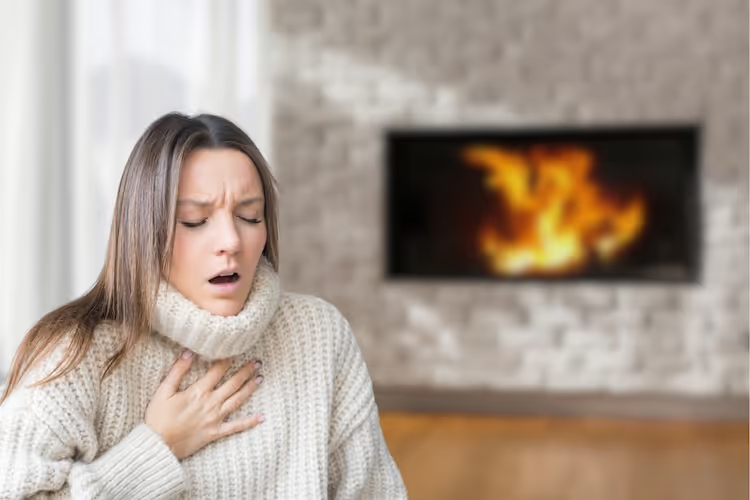
What is carbon monoxide and where does the gas occur?
Carbon monoxide (CO) is a colorless, odorless, and tasteless gas produced by incomplete combustion of fossil fuels. In homes and industry, it's mainly released by burning gas, oil, wood, coal, or gasoline. Typical indoor sources are:
- Defective or poorly maintained heating systems (e.g. gas boilers)
- Open fireplaces or wood stoves
- Vehicle exhaust, especially in enclosed spaces like garages
- Grills or radiant heaters used indoors
What is carbon monoxide poisoning?
Carbon monoxide poisoning occurs when people inhale carbon monoxide at dangerous concentrations. CO binds in the blood to hemoglobin, which is normally responsible for oxygen transport. Since carbon monoxide binds to hemoglobin about 300 times more strongly than oxygen, oxygen supply to cells is blocked. This leads to oxygen deprivation in tissue, which can result in severe health damage or death.
Carbon monoxide poisoning is especially dangerous because those affected don't notice the gas, and there's no immediately perceptible stimulus, like smell or taste, to warn of the danger. To detect an (elevated) concentration of the gas, you need a measuring device — like the air-Q.
Typical symptoms of carbon monoxide poisoning
According to the "S2k guideline on diagnosis and treatment" of carbon monoxide poisoning from the German Interdisciplinary Association for Intensive Care and Emergency Medicine, the following symptoms can indicate carbon monoxide poisoning:
- Headaches
- Dizziness
- Feeling of weakness
- Nausea
- Vomiting
Signs of severe carbon monoxide poisoning, on the other hand, are the following symptoms:
- Disorientation & impaired consciousness
- Seizures
- Angina pectoris
- Cardiac arrhythmia
- Dyspnea, tachypnea
- Pulmonary edema
- ECG changes or pathological cardiac biomarkers
- Metabolic acidosis
- Very high CO-Hb values (blood gas analysis value at end of exposure)
Long-term consequences of carbon monoxide poisoning can also occur after surviving acute poisoning, especially if exposure lasted a long time or the poisoning was severe. These late effects primarily affect the central nervous system and the cardiovascular system.
Possible long-term consequences of carbon monoxide poisoning:
- Neurological damage: memory problems (amnesia), concentration difficulties, cognitive impairment (e.g. slowed thinking), behavioral changes (depression, irritability), movement disorders (e.g. tremors, coordination problems), sleep disturbances
- Cardiovascular disease: cardiac arrhythmia, heart failure, elevated risk of heart attack
- Delayed neurological syndrome: some patients develop a delayed neurological syndrome after a few weeks to months, known as "Delayed Neuropsychiatric Syndrome" (DNS). Symptoms such as dementia, Parkinson's-like symptoms, and personality changes can occur.
- Psychological effects: anxiety disorders, post-traumatic stress disorder (PTSD), depression
In the worst case, carbon monoxide poisoning leads to unconsciousness and respiratory arrest. The severity of the effect depends on the concentration and duration of exposure to the pollutant.
According to the German Medical Association and National Association of Statutory Health Insurance Physicians, about 3,000 cases of carbon monoxide poisoning requiring medical treatment occur in Germany each year, of which about 500 are fatal.
%2520(6).jpeg)
Typical everyday risks of carbon monoxide
Carbon monoxide can be released in many everyday situations, especially when combustion processes take place in enclosed or poorly ventilated spaces. Poisoning risk rises when exhaust fumes aren't adequately vented.
In the cold season, heating systems, fireplaces, and stoves run more intensively. Defective or poorly maintained heating devices (e.g. gas boilers or oil stoves), as well as clogged or damaged flue systems (chimneys), can lead to CO leaks. Open fireplaces, if not properly ventilated, can also release carbon monoxide. Since windows and doors often stay closed, ventilation is limited in winter, increasing the risk of CO buildup in the air.
Another scenario occurs while camping. Here, portable gas heaters, camping stoves, or grills used in tents, RVs, or poorly ventilated spaces can release CO. Especially at low temperatures, people sometimes try to use camping heaters or gas stoves indoors, which is extremely dangerous.
During renovation work, ventilation systems can be blocked or damaged, causing exhaust fumes to no longer vent properly. This mainly occurs during work involving open flames or combustion processes, such as welding or paint stripping with a flame.
If a car or motorcycle runs in an enclosed garage, dangerous CO concentrations can also arise. Improper use of gas stoves in kitchens, or defective devices without adequate ventilation, can also release carbon monoxide. In addition, charcoal grills or other grilling equipment used in enclosed spaces or garages can contribute to elevated carbon monoxide concentration.
Who is carbon monoxide poisoning especially dangerous for?
Especially in children, CO poisoning can cause severe developmental disorders or permanent damage. Children breathe faster than adults, so they can absorb dangerous CO concentrations faster. This makes them especially vulnerable to neurological damage from oxygen deprivation.
Older people often already have existing health problems, such as heart or respiratory disease, and react more sensitively to oxygen deprivation. They may also confuse symptoms of CO poisoning (e.g. dizziness or fatigue) with age-related complaints.
Pregnant women also face an elevated risk, since the fetus reacts more sensitively to oxygen deprivation. CO poisoning can cause severe developmental disorders or even fetal death.
Pets, especially birds, also react faster to CO poisoning, since their breathing rate is higher and they have smaller bodies, increasing the risk of life-threatening poisoning. They also can't communicate poisoning symptoms, making early detection difficult.
Solution: preventing carbon monoxide poisoning with the air-Q as a CO detector
To avoid carbon monoxide poisoning, using smart air quality monitors like the air-Q is recommended. This device monitors indoor air composition and alerts you early to elevated CO readings. This lets you avoid dangerous situations and take countermeasures in time to protect residents' health.
The air-Q: what is it?
The air-Q is a state-of-the-art air monitor that monitors up to 15 different parameters in real time, including carbon monoxide (CO), particulate matter, temperature, and humidity. With its precise sensors, the air-Q continuously delivers current indoor air quality data. For critical CO readings and other dangerous air parameters, you're informed via various alarm functions: an LED warning light visually signals acute danger, while push notifications, emails, and audible warnings enable fast responses. The air-Q also offers mobile app connectivity, letting you conveniently monitor your air quality from your smartphone. Compared to conventional CO detectors, which often only respond to CO and have limited functionality, the air-Q offers comprehensive air quality monitoring and a user-friendly way to respond early to changes.
How does the air-Q function as a carbon monoxide detector?
The air-Q supports you in various ways to prevent carbon monoxide poisoning:
- Real-time monitoring: the air-Q continuously measures air quality and immediately detects elevated carbon monoxide levels. This lets you identify dangerous concentrations early and take action.
- Alarm functions: if defined CO thresholds are exceeded, the air-Q activates various alarm functions. You receive visual (LED warning lights) and audible warnings, as well as notifications via push messages and email. This lets you respond immediately, even if you're not in the same room.
- Mobile access & smart home: besides its monitoring and alarm functions, the air-Q is also smart-home-capable. This means it can be integrated into existing smart-home systems, enabling comprehensive control of indoor air quality. You can configure the air monitor to automatically activate ventilation systems or your air purifier when it detects elevated carbon monoxide levels or other pollutants in the air.
- Comprehensive air quality analysis: besides carbon monoxide, the air-Q also monitors other pollutants and parameters affecting air quality. This gives you a holistic view of room air and helps minimize other health risks too.
- Preventive measures: by providing air quality information, the air-Q helps you maintain optimal air quality. This lets you ventilate or check heating devices based on data, before dangerous situations arise.
Prevention tips: how to prevent carbon monoxide poisoning
- Regular maintenance of heating devices: have heating systems, stoves, and fireplaces regularly inspected and maintained by professionals.
- Install CO detectors: install a carbon monoxide detector like the air-Q near bedrooms as well as near heating devices.
- Safe use of gas devices: only use gas devices in well-ventilated rooms and keep them clean and functional.
- Avoid vehicle exhaust: never let cars run in enclosed garages — not even briefly.
- Ensure regular ventilation: ensure adequate ventilation indoors, especially when using fireplaces, wood stoves, or grills, and ventilate as needed. Make sure to exchange stale room air with fresh air, for example through cross-ventilation and burst ventilation rather than tilted windows. An air monitor reliably shows you when it's time to ventilate. Learn in our separate articles how proper ventilation in fall and winter works and when you should ventilate.
- Use heating devices outdoors: never use portable heaters or grills in enclosed spaces or tents.
- Watch for symptoms: stay alert and check for signs of CO poisoning such as headaches, dizziness, or nausea. If these occur, seek medical help immediately.
Conclusion
We recommend monitoring CO levels indoors to ensure residents' health and safety. A sudden rise in carbon monoxide concentration can cause serious health consequences that often go unnoticed until it's too late. It's therefore advisable to use a reliable air monitor like the air-Q. This device offers continuous real-time monitoring of CO levels and alerts you to dangerous concentrations, so immediate action can be taken. Integration with smart-home systems also enables automatic control of ventilation systems and air purifiers, proactively improving air quality. By investing in such a monitoring device, you can not only minimize the risk of gas poisoning but also significantly increase the overall well-being and safety of all residents.