
Air Quality Sensors in the Smart Home: Optimal Air Quality at Home
Discover how air quality sensors improve the air in your smart home. Learn more about integrating home assistant and homematic solutions to monitor pollutants and protect your health. Use the air-Q to get real-time data and continuously optimize air quality.

In the modern world of the smart home, air quality sensors play a crucial role in a healthy living environment. These sensors continuously monitor the air quality in your home and help detect and minimize harmful pollutants. In this article, you will learn how home assistant air quality, homematic air quality, smart home air quality and air quality smart home solutions can contribute to improving your living comfort.
Why is air quality monitoring important?
Indoor air quality has a direct impact on our health and well-being. Since we spend most of our time indoors, it is important to monitor air quality to minimize the risk of allergies, respiratory diseases and other health problems.
Health benefits
- Reduction of allergens: Air quality sensors help detect and reduce allergens such as pollen and dust mites. The air-Q can monitor these particles in real time and notify you when action is needed.
- Prevention of respiratory diseases: By monitoring pollutants such as particulate matter and VOCs (volatile organic compounds), respiratory diseases can be prevented. The air-Q provides detailed analyses of these pollutants and helps you keep the air clean.
- Improvement of well-being: Good air quality contributes to better sleep and increased overall well-being. With a device like the air-Q, you can ensure that your indoor air is always optimal.
-(300-x-250-px)-(1500-x-1300-px).jpg)
-
How do air quality sensors work in the smart home?
Air quality sensors in the smart home are equipped with various sensors that measure pollutant concentrations in the air. They record parameters such as particulate matter, VOCs, carbon dioxide and humidity. This data is analyzed in real time and transmitted to your smart home system.
Benefits of smart home air quality sensors:
- Real-time monitoring: Continuous measurement and analysis of air quality. The air-Q provides precise real-time data that helps you respond immediately to changes.
- Automation: Integration into smart home systems enables automatic responses, such as opening windows or turning on air purifiers. With the air-Q, you can create automations perfectly tailored to your needs.
- Notifications: Alerts for critical values protect your health. The air-Q sends you instant alarms when air quality falls below a certain standard.
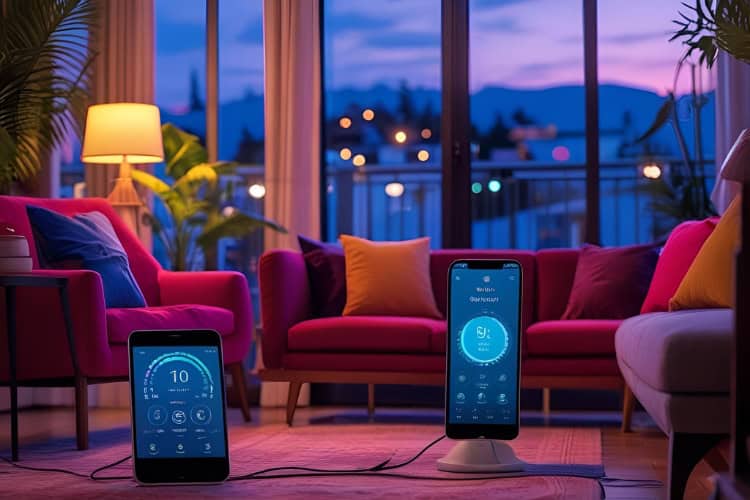
Integrating air quality sensors into smart home systems
Home Assistant air quality
Home Assistant is an open-source platform that makes it possible to integrate and control various smart home devices. With an air quality sensor, you can:
- Create personalized automations that respond to air quality, e.g. starting ventilation systems at high CO2 levels. The air-Q integrates seamlessly with Home Assistant and offers comprehensive automation options.
- Get detailed reports on air quality to analyze long-term trends. The air-Q stores historical data that helps you monitor air quality over time.
Homematic air quality
Homematic offers an extensive range of smart home solutions, including air quality sensors. These sensors integrate seamlessly with the Homematic system and offer:
- Reliable monitoring of air quality with precise sensors. The air-Q can be combined with Homematic devices to create a comprehensive monitoring network.
- Easy installation and integration into existing systems. The air-Q is user-friendly and integrates effortlessly into existing Homematic systems.
Improving air quality in the smart home
To improve air quality in your smart home, you should take the following measures:
- Regular ventilation: Open windows several times a day to let in fresh air. The air-Q can notify you when it is time to ventilate.
- Use of air purifiers: These devices can effectively remove pollutants from the air. The air-Q provides data that helps maximize the efficiency of your air purifiers.
- Plants as natural filters: Certain plants can clean the air of pollutants and regulate humidity. The air-Q can show you which plants are most effective.
A device like the air-Q can help you monitor the effectiveness of these measures and ensure that your indoor air remains healthy.
Why air-Q for your smart home?
The air-Q not only provides precise measurement of air quality, but also comprehensive analysis of the collected data. With its user-friendly app, you can:
- Monitor long-term trends to continuously improve air quality. The app presents the data in clear graphs that make it easy for you to recognize changes in air quality.
- Set individual alarms that inform you immediately about critical values. This is particularly useful in environments where air quality can fluctuate quickly.
- Create detailed reports to make informed decisions about improving air quality. These reports can also be used to meet legal requirements or as a basis for investments in better ventilation systems.
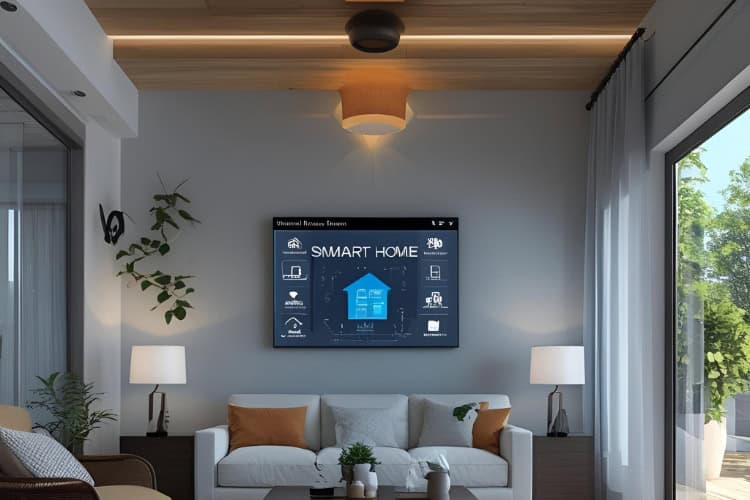
The future of air quality sensors in the smart home
With increasing urbanization and climate change, monitoring air quality is becoming ever more important. Future developments could enable even more precise measurement and prediction of air quality problems. Connected devices and smart home integrations will play a central role in monitoring and controlling air quality in real time.
Innovations in air quality monitoring:
- Artificial intelligence: AI-powered systems can recognize patterns in the data and make predictions about future air quality problems. The air-Q uses advanced algorithms to precisely analyze air quality.
- Integration into smart home systems: Air quality sensors could be integrated into existing smart home systems to automatically regulate air quality, e.g. by opening windows or turning on air purifiers.
- Mobile solutions: Portable devices could make it possible to monitor air quality on the go, which would be especially beneficial for people with respiratory diseases.
Monitoring air quality in the smart home is essential for a healthy life. With an air quality sensor like the air-Q, you can ensure that your environment is safe and free of harmful pollutants. Use the data you gain to improve your indoor air and create a healthy living environment. By combining technology, knowledge and practical measures, you can actively contribute to improving your quality of life.