
How an Air Quality Sensor Monitors and Improves Indoor Air Quality
Good indoor air quality is essential for health and well-being. With an air quality sensor, you can precisely monitor and optimize air quality. This technology helps detect invisible hazards and create a healthier living and working environment. Use air quality sensors for a better quality of life.
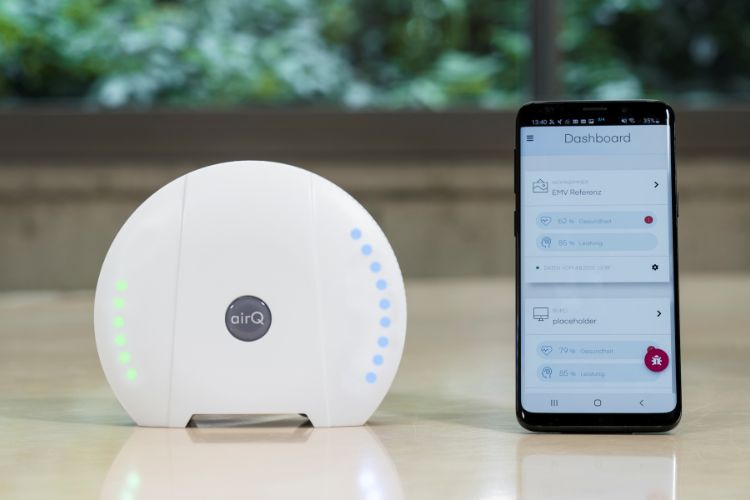
In this article, you'll find the following content:
- Why does an air quality sensor make sense?
- What parameters does an air quality sensor measure?
- Devices for indoor air analysis?
- Advantages of the air-Q: A versatile indoor air analysis device
- How does an air quality sensor help in practice?
- Tips for optimal use
- Conclusion: An air quality sensor for a better indoor climate
Why does an air quality sensor make sense?
Poor air quality often goes unnoticed, even though it can have a significant impact on health. Pollutants such as particulate matter, VOCs, or an elevated CO₂ level irritate the airways, reduce the ability to concentrate, and increase the risk of allergies or chronic illnesses. This is especially true indoors, where we spend up to 90% of our time and these burdens can build up quickly.
Air quality sensors offer a simple solution here: they continuously monitor the indoor air by recording key parameters and making invisible hazards visible. This allows targeted measures such as ventilating, using an air purifier, or adjusting the indoor climate.
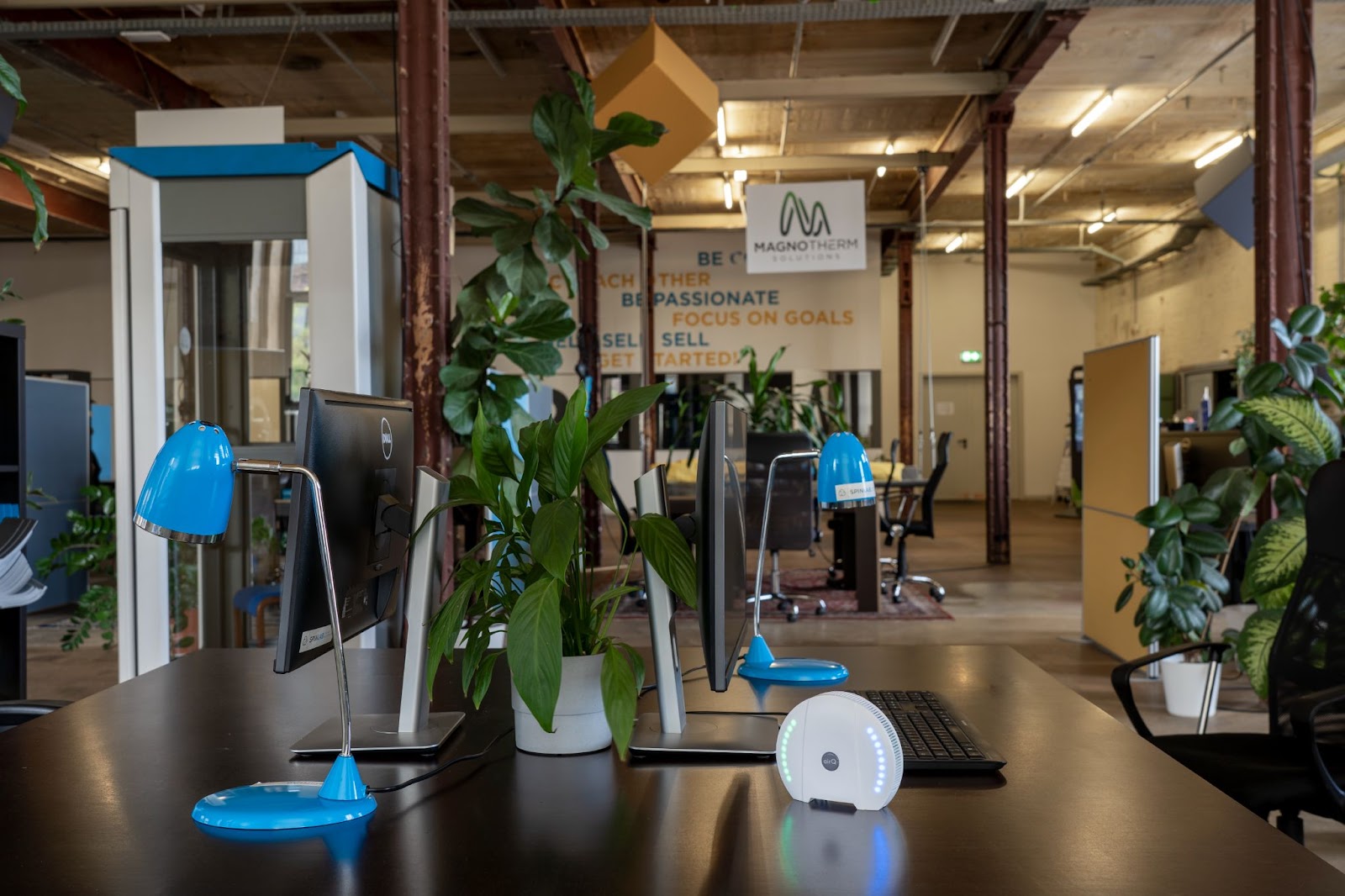
These devices are especially important in heavily used rooms such as offices, living spaces, or classrooms.
What parameters does an air quality sensor measure?
A modern air quality sensor can measure a wide range of values:
- Particulate matter (PM2.5 and PM10): These tiny particles penetrate deep into the lungs and can trigger health problems such as asthma or cardiovascular disease.
- VOCs (volatile organic compounds): These are released, for example, from furniture, paints, or cleaning products and can significantly worsen air quality.
- CO₂ concentration: An indicator of a room's need for fresh air; excessive levels cause fatigue and difficulty concentrating.
- Oxygen level: Especially important in poorly ventilated rooms, to ensure a pleasant and healthy climate.
- Relative humidity: Prevents air that is either too dry or too humid, which can promote mold growth or dry mucous membranes.
Devices for indoor air analysis
Various devices are suitable for indoor air analysis, each tailored to specific pollutants:
- VOC meter: Measures pollutants released from household products or building materials.
- Particulate matter meter: Provides real-time data on airborne particles.
- CO₂ and oxygen meter: Monitors the balance between fresh air supply and stale air.
- Air quality sensor with smart home integration: Detects critical values and automatically triggers measures, such as switching on an air purifier or activating a ventilation system.
An indoor air analysis device such as the air-Q, often combines several of these sensors, providing a comprehensive overview of air quality.
Advantages of the air-Q: A versatile indoor air analysis device
The air-Q is an example of a particularly comprehensive indoor air analysis device that goes beyond standard functions. In addition to measuring general air parameters such as particulate matter, VOCs, and oxygen level, it also monitors specialized values that are relevant in specific situations. These include:
- Formaldehyde: A pollutant that frequently off-gasses from furniture, varnishes, or carpets.
- Radon: A radioactive gas that can be problematic especially in certain regions and in basements.
- Ozone: Can cause health problems both indoors and outdoors, especially at high levels.
- Ammonia: A relevant parameter in households or workplaces that use chemical cleaning products.
- Lux: Measuring light intensity helps optimize lighting for productivity and well-being.
In addition, the air-Q contributes to mold prevention by providing precise temperature and humidity readings, flagging potentially critical conditions. An air quality monitor like the air-Q can be used in a wide range of situations and settings.
This comprehensive functionality makes it suitable for both private and professional applications where, in addition to general air quality, specific pollutants or environmental conditions also need to be monitored.
This is complemented by the calculation of health indices, which use the measured values to provide an assessment of how air quality might affect health and performance.
This comprehensive functionality makes the air-Q especially suitable for private and professional applications where, in addition to general air quality, specific pollutants or health aspects also need to be monitored.
How does an air quality sensor help in practice?
- Early warning system for pollutants: Thanks to precise readings, an air quality sensor gives early warning of harmful concentrations of particulate matter, VOCs, or other pollutants.
- Optimized ventilation: With a sensor, you can pinpoint exactly when ventilating is really necessary – this saves energy and ensures optimal air circulation.
- Integration with smart home systems: Many modern devices can be connected to smart home solutions, enabling automated measures such as switching on an air purifier.
A practical example: In offices where many people work, a particulate matter meter combined with a CO₂ sensor can monitor air quality. If critical values are reached, the system automatically activates a ventilation unit or sends staff a reminder to open the windows.
Tips for optimal use
- Placement: Place the device centrally in the room, away from windows and heat sources, to get accurate readings.
- Regular calibration: Check the device's accuracy at least once a year.
- Data analysis: Use manufacturer apps or dashboards to identify long-term trends and plan targeted measures.
- Combination with other devices: Use an indoor air analysis device together with particulate matter and VOC meters to monitor the air comprehensively.
An air quality sensor for a better indoor climate
An air quality sensor is an indispensable tool for monitoring air quality and minimizing health risks. Combined with devices such as VOC meters, particulate matter meters, and a comprehensive indoor air analysis device like the air-Q, monitoring the air becomes child's play. This lets you not only protect your health but also improve your quality of life and energy efficiency.
An air quality sensor is a valuable aid for monitoring air quality and keeping it healthy. Combined with a VOC meter, a particulate matter meter, and an oxygen meter for indoor air, you get a complete overview and control over your indoor climate. These technologies make invisible hazards visible and let you take countermeasures early – for greater health, well-being, and energy efficiency.