The air-Q Virus-Free Index: How to Tell If Your Room Air Is Making You Sick
Covid gave a boost to research into aerosols and air quality. Numerous studies show a link between carbon dioxide levels and infection risk. In our new app version, you get a Virus-Free Index that lets you recognize and reduce infection risk. Here's how it works.

CO₂ levels as an indicator of infectious room air
Since the Covid pandemic, aerosols — tiny liquid droplets — have been considered a major transmission route for viral illnesses like SARS-CoV2 or flu. Every person exhales roughly eight liters of air per minute. This breath comes from lung tissue, where it may have picked up viruses. When exhaled, aerosols enter room air and float there due to their low settling speed. This means room air stays polluted for a long time. Since air in a room moves around, people in the room are exposed to elevated infection risk even at a sufficient distance from an infected person. If a healthy person then inhales these contaminated droplets, the illness can be transmitted. In unventilated rooms, viral load rises rapidly.
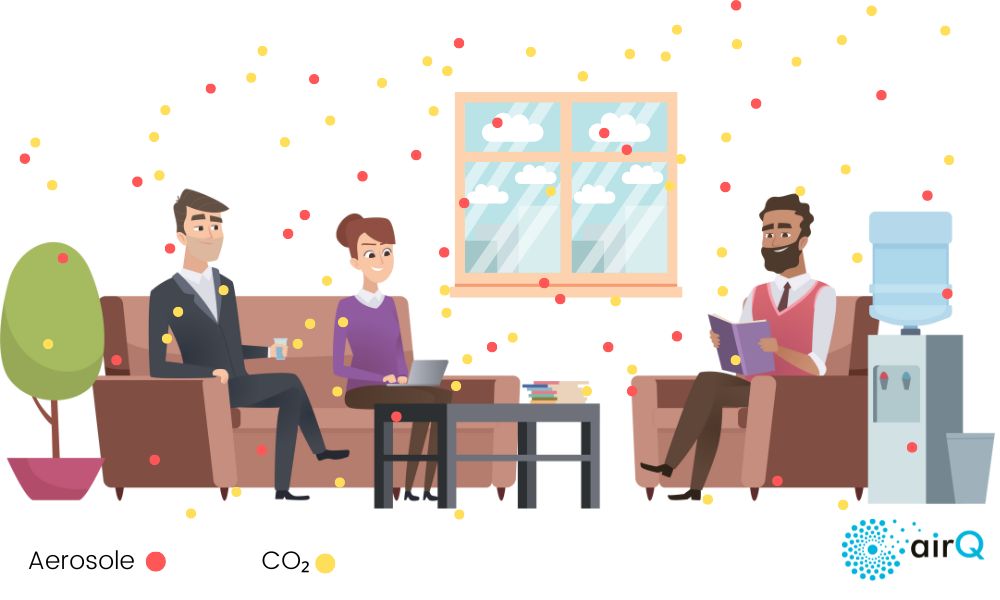
Direct measurement of virus-laden aerosols isn't possible. This is mainly due to the sheer number of viral illnesses and the resulting variation in particles. CO₂ levels can be used as an indicator of rising viral load and thus of elevated transmission risk. That's because while fresh air contains only a 0.05% volume share of CO₂, exhaled air contains 4% of the gas. Without a supply of fresh air, the CO₂ share indoors therefore rises continuously. A measured CO₂ concentration of about 1200 ppm, for example, means that nearly 2% of room air consists of already-exhaled air. Every 50th breath you take brings exhaled air back into your own lungs.
The air-Q's CO₂ sensors can lower infection risk
According to the German Federal Environment Agency's general guideline for the health assessment of carbon dioxide in indoor air, a CO₂ concentration below 1000 ppm is hygienically unproblematic. A concentration between 1000 and 2000 ppm, on the other hand, is classified by the commission as concerning, and anything above that as unacceptable.
High-quality CO₂ sensors like those in the air-Q air monitor are therefore an ideal way to check room air quality and thus reduce impending infection risk. If the carbon dioxide level exceeds a certain value, ventilation is needed.
The air-Q Virus-Free Index can protect against infectious diseases
In our new app version, you get a Virus-Free Index. Based on room air's carbon dioxide level, we estimate infection risk. If the Virus-Free Index shows 100%, viral load is low. If a low percentage is shown instead, air quality is poor and infection risk rises. You should urgently ensure an air exchange.
The air-Q air monitor with the Virus-Free Index is well suited to rooms with high occupancy density, such as:
- Medical practice rooms
- Waiting rooms at doctors' offices
- Offices
- Conference, meeting, and training rooms
- Schools & educational institutions (universities, etc.)
- Daycare centers
- Cafés, restaurants
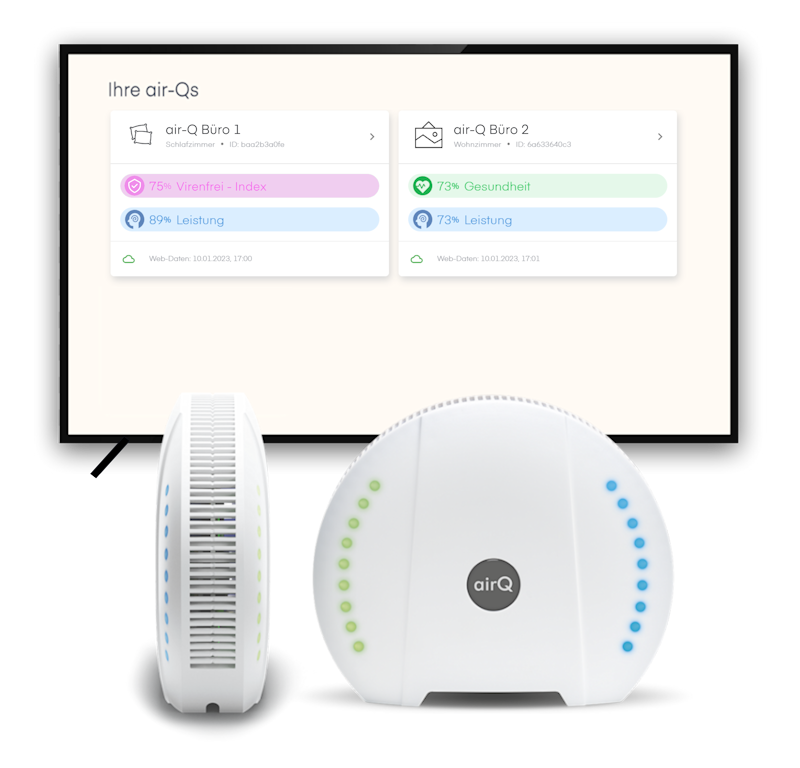
With our CO₂ sensor, you can estimate how much stale air is indoors and prevent infections through targeted ventilation. You can also set thresholds on the air-Q air monitor. When these are reached, the air-Q sounds an alarm.
Your benefits from the air-Q Virus-Free Index:
- peace of mind
- needs-based ventilation based on measurement data
- reduction of germ-laden aerosols in room air
- reduced infection risk
- intuitive warning via visual LED traffic light system
Present & visualize measurement data with the air-Q Widgets
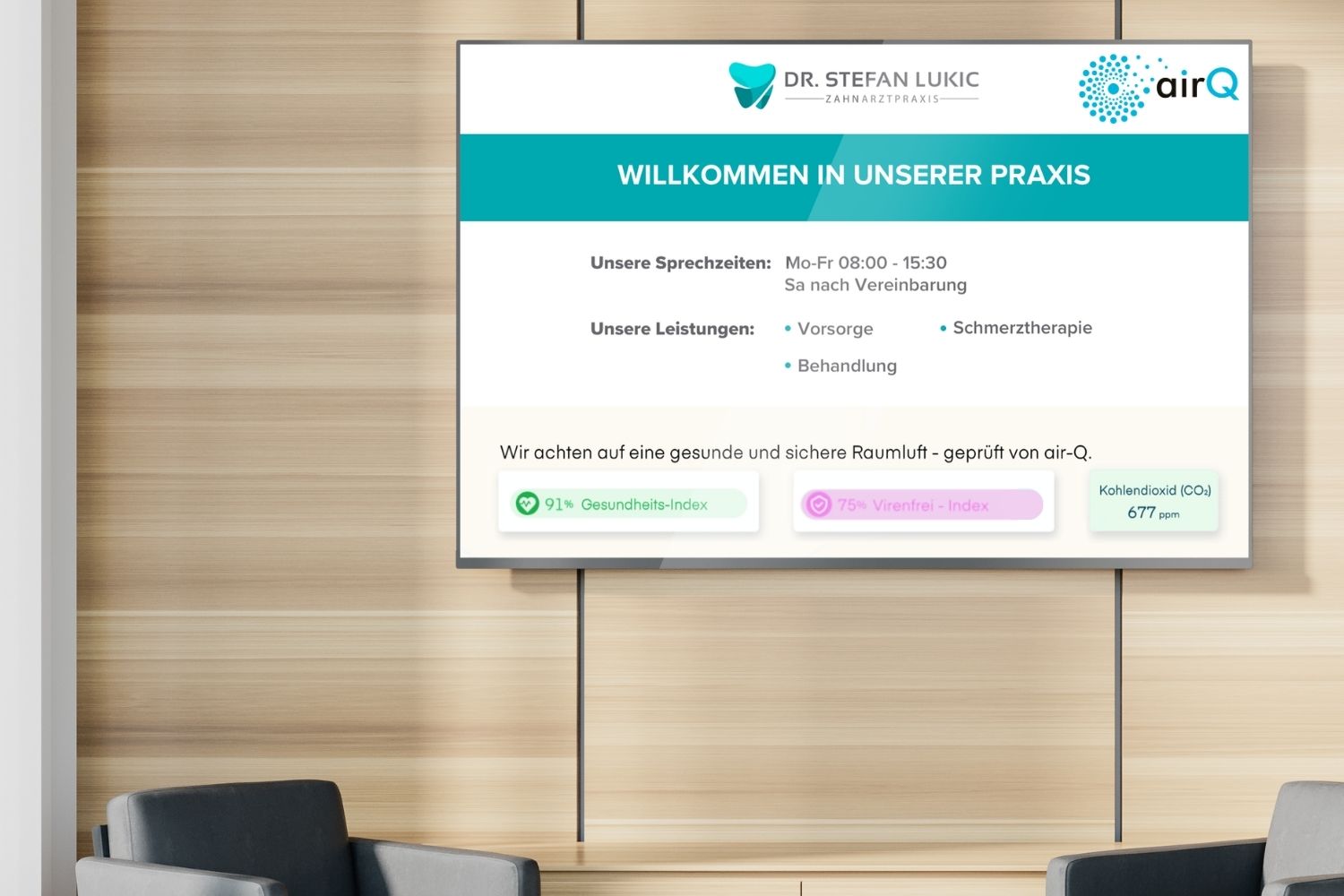
Show your customers, clients, or patients the current air quality in the room. Using the new air-Q Smart Widgets, you present the readings of all the air-Q's sensors on info screens, in presentations, and on websites. Our appealing info screens display readings live. Besides entertainment, you give waiting visitors a sense of security and thus build trust in your business.