
air-Q Now With Many New Features for Air Quality Monitoring
We're continually working on new features and improvements for the air-Q. The device's hardware still offers plenty of room for this — so there will be many more updates for better air ahead.
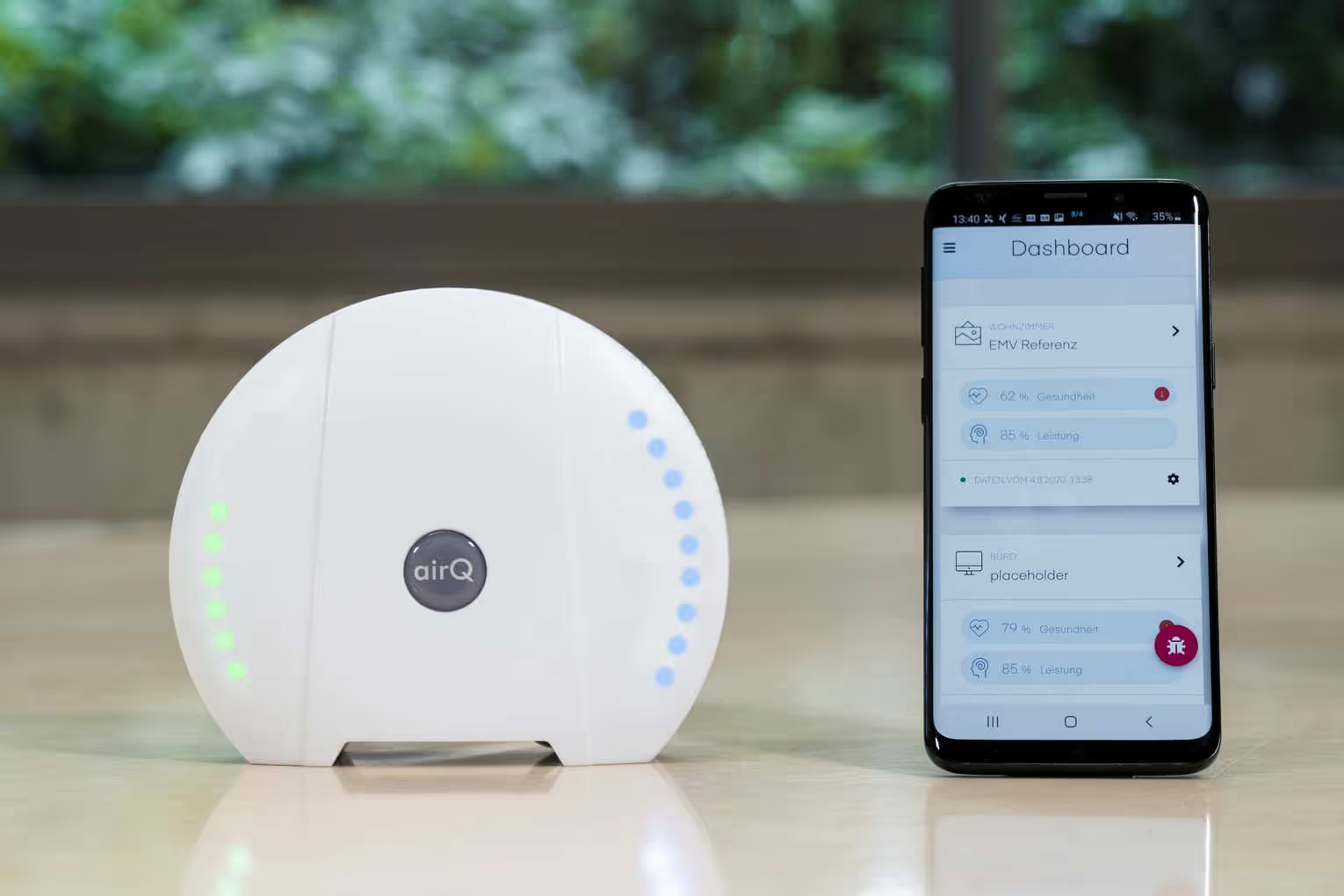
We usually use our blog to share news about air quality, air pollutants, and indoor climate. This time, we want to use a short post to introduce the latest developments around our air monitor and give a small roadmap for upcoming features.
With the current update, we've incorporated customer feedback from recent months and made a big step forward. There are now a range of improvements that make it easier to access air quality data, settings, and general handling of the air-Q.
Here's what's new:
All air quality readings now also on the device's own web page
The air-Q regularly receives device firmware updates — this is the software that runs on the air-Q device itself and controls all measurement processes around the air quality sensors. This includes, among other things, calibration and the calculation of the air quality health/performance index. The air-Q also runs a simple device web page, through which various basic settings are possible — for example configuring WiFi settings and the device password.
New is the option to also display the air-Q's air sensor readings on the device web page. The air-Q app doesn't need to be installed for this. This allows for greater independence from the app, which could be especially interesting for schools or some businesses.
New device setup methods
A number of things have also been reworked in the smartphone app (iOS and Android). The air-Q's WiFi configuration is the first feature our customers encounter. Since there are so many different smartphones with varying technical requirements, we've expanded the setup options. Also new: better integration of "direct connection" — meaning using the air-Q air monitor without a router, i.e. a direct connection between the air-Q and the smartphone.
Settings overhaul
The current smartphone app (05/05/2021) has been completely reworked — both in content and visually. The software architecture has also been prepared for further online features.
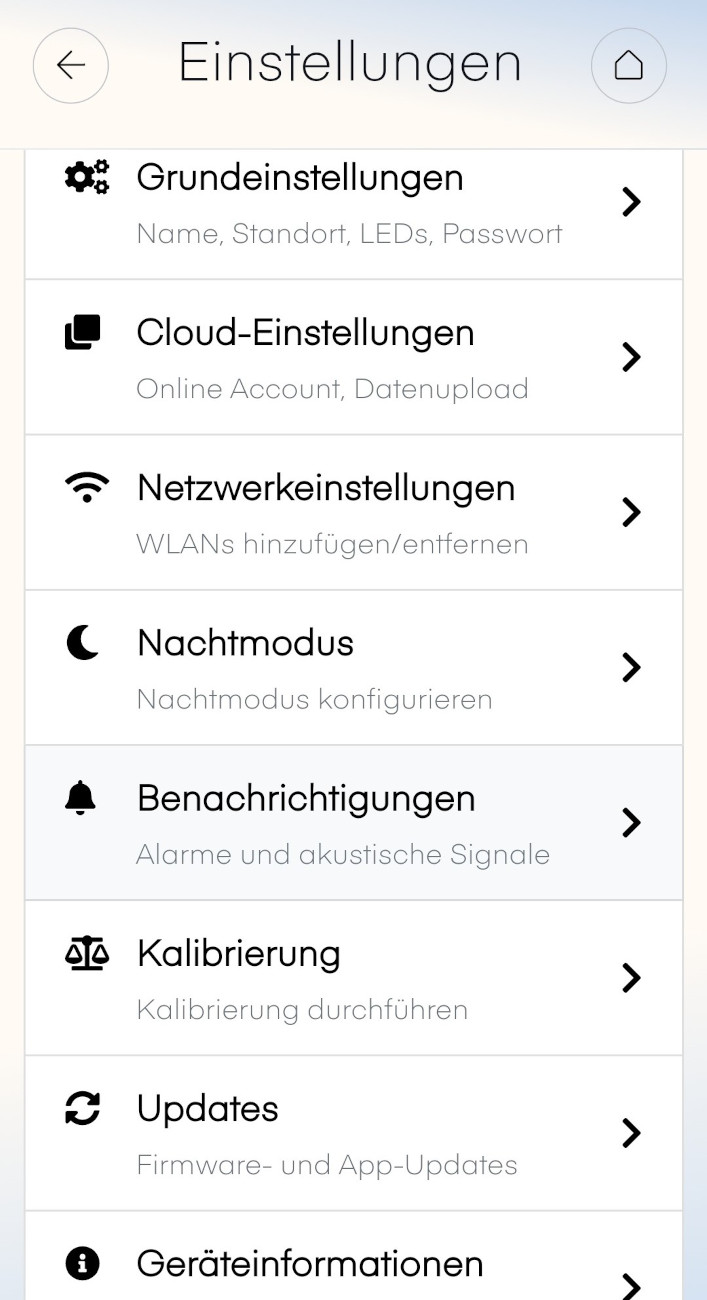
There are many new settings that significantly expand the air-Q's functionality — for example:
LED themes & audible signals
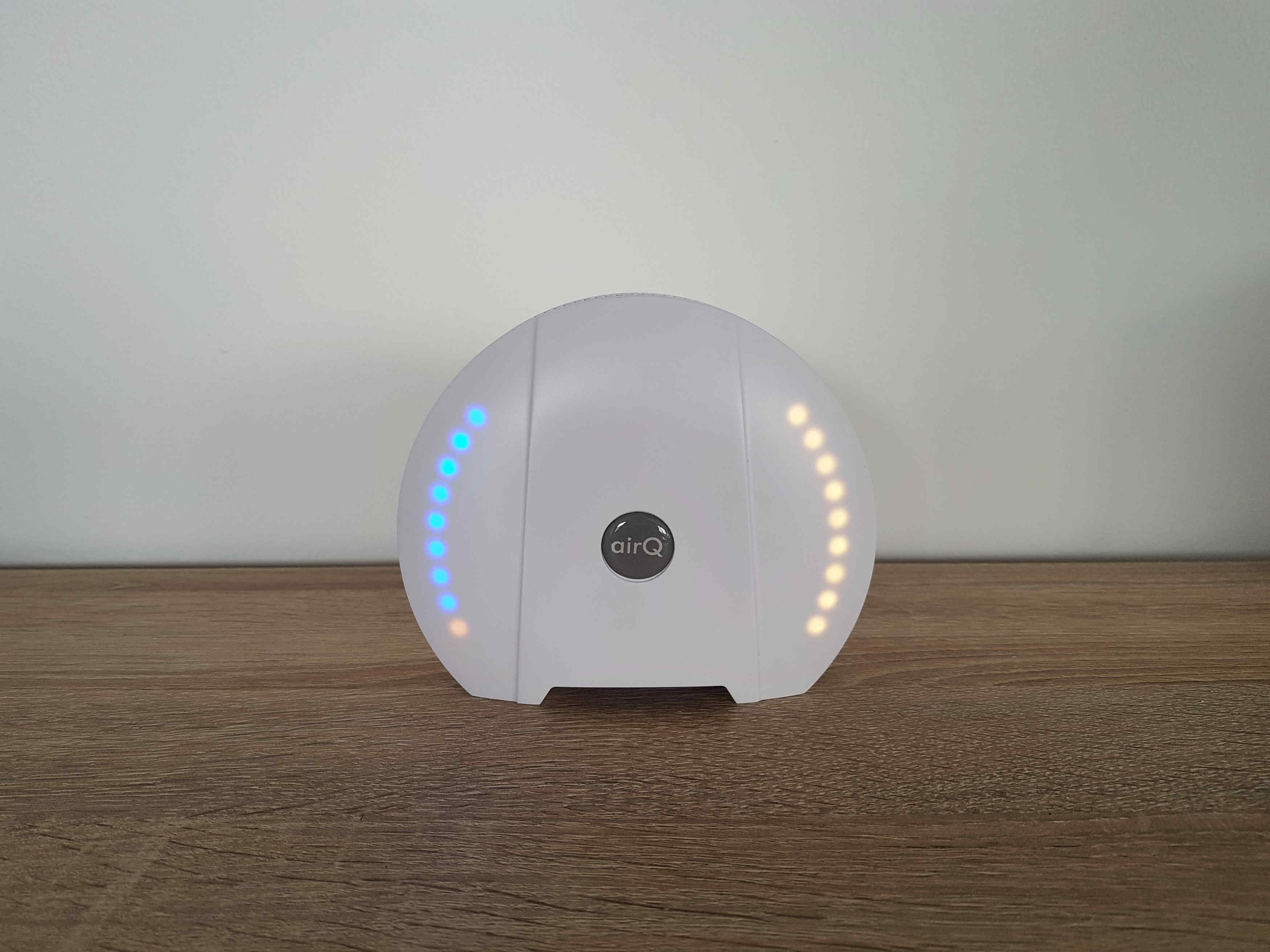
The LED themes already available for a while for our air-Q Science customers are now adjustable by anyone in the smartphone app. With LED themes for particulate matter, carbon dioxide, carbon monoxide, VOC, and noise, you can assign your own sensor reading to each side of the air-Q's LEDs, or also use our air-Q air quality indices.
It's also now possible to individually set a warning tone for exceeding or dropping below certain readings. For example, you can easily configure the air-Q to emit a short audible signal when the threshold of 1,000 ppm (parts per million) carbon dioxide (CO₂) is exceeded. A longer/louder/higher-pitched signal is emitted when 2,000 ppm CO₂ is exceeded. This lets you monitor indoor air quality even more precisely according to your own specific needs.
More features and roadmap
There have also been simplifications to the air-Q Cloud connection — meaning how air-Q data is optionally transmitted to the cloud — as well as to the calibration features. A full list of firmware improvements can now also be viewed in the app.
Some important foundations have now been laid for upcoming versions, making it possible to quickly add further features. Planned features include:
- better export functions for measurement data in the air-Q Cloud
- push notifications (smartphone and email)
- integration of further online smart home standards, alongside the already functional offline smart home standards such as openHAB.
If you don't want to miss any firmware news, subscribe to our newsletter, or follow our social media channels.