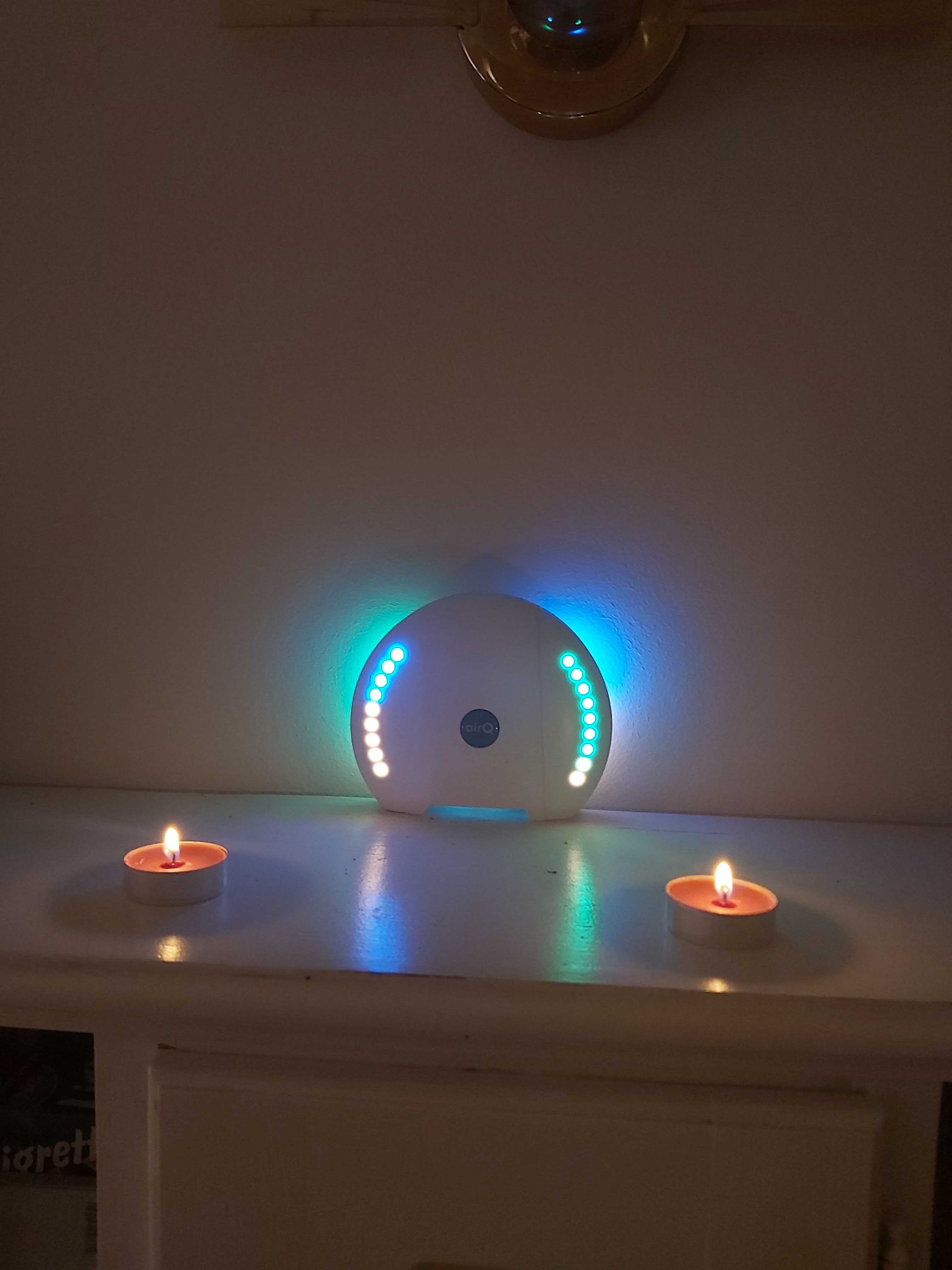
air-Q Lab Hands-On Test: How Unhealthy Are Scented Candles?
In our Halloween special, we got to the bottom of the question: can scented candles and the like be harmful to health, even carcinogenic? We measured just how much the burning candles change indoor air quality. Find the results here.
Scented candles quickly conjure up a cozy atmosphere, but their sweet fragrance also spreads pollutants. In our separate article, we took a closer look at the risks and searched for healthy alternatives. Since we wanted to know for sure, we recreated the effects in a self-test and recorded them with our air-Q air monitor.
Scented candles in the air-Q test: pollutant development in room air
We investigated how using scented candles affects room air. For this, we ran a hands-on experiment in a room of about 22 m². Before lighting the store-bought scented candles (Ikea scented tealights), we ventilated briefly. Once the relevant readings showed a good baseline, we lit the 5 scented candles at around 9:15 p.m. We placed two candles directly next to the air monitor air-Q and three more on a table. We let the experiment run until 11:00 p.m.
Test results: carbon monoxide development from scented candles
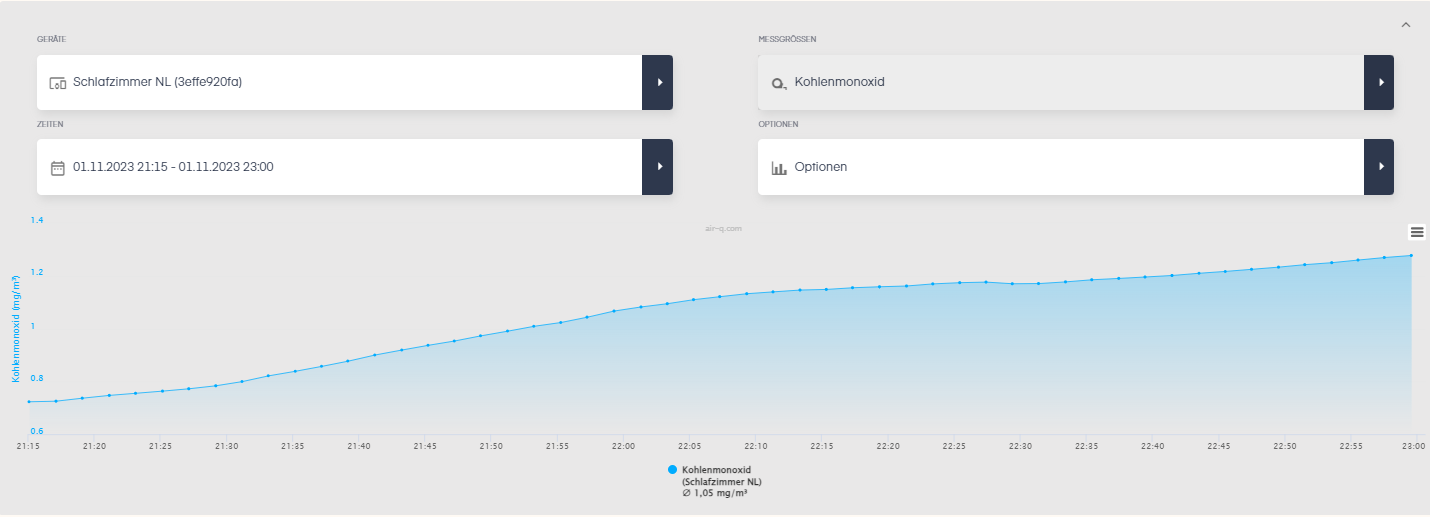
The sensor for carbon monoxide reacted noticeably while the scented candles were burning. Shortly after the test began, the reading rose steadily: from an initial 0.7 to about 1.3 μg/m³. That's an increase of 85.7 percent. The average carbon monoxide level in the room was 1.05 μg/m³. Scented candles therefore steadily deplete oxygen in the room and enrich it with carbon monoxide.
Test results: particulate matter pollution from scented candles
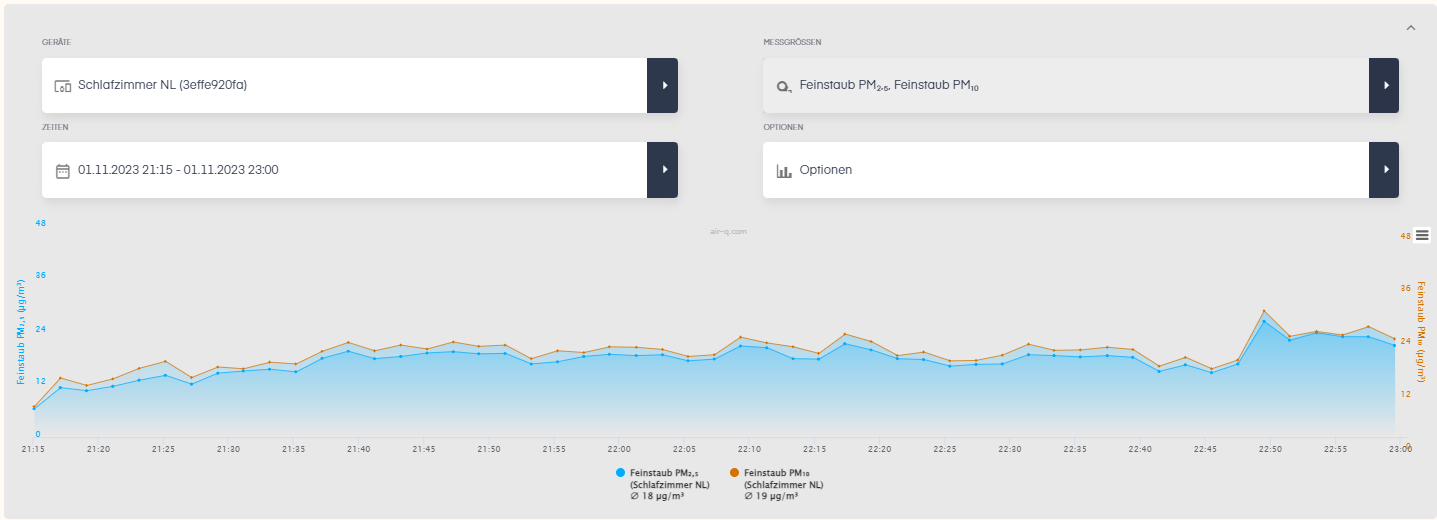
The particulate matter readings also changed during the test period. Unlike carbon monoxide, the value didn't rise steadily but showed a continuous alternation of rising and falling readings, though the starting value remained exceeded throughout. The air-Q detected both large particulate matter particles (PM₁₀) and fine components (PM₂.₅), with both particle sizes behaving similarly. While a minimum of 6 to 7 μg/m³ was readable at the start, the values kept rising again, reaching a peak of 26 to 28 μg/m³ around 10:50 p.m. Particulate matter readings thus increased by 300 percent.
Test results: VOC pollution from burning candles
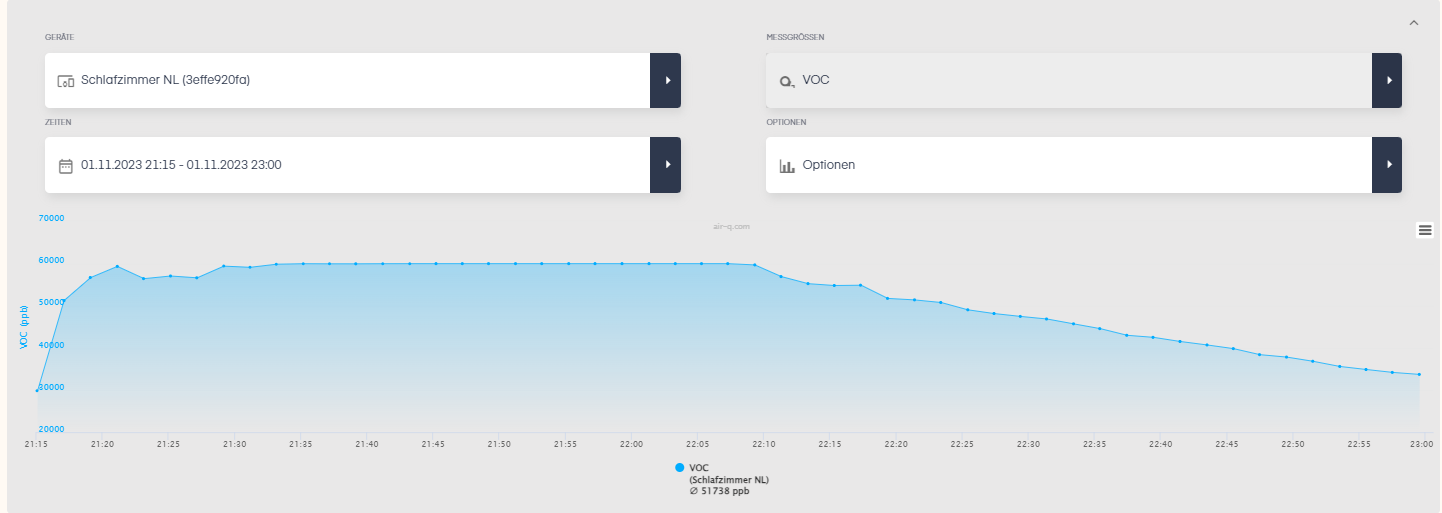
Already at the start of the test period, readings for volatile organic compounds (VOCs) rose from 29,000 to 60,000 ppb within a few minutes. That's an increase of 106.9 percent compared to the starting value. After that, the air-Q showed relatively steady readings on a plateau at around 60,000 ppb. After about an hour, VOC values dropped again, so that by the end of the experiment VOC pollution was around 35,000 ppb – still a 20.7 percent increase compared to the starting value. The average level was 51,738 ppb.
Test results: nitrogen dioxide in room air from scented candles
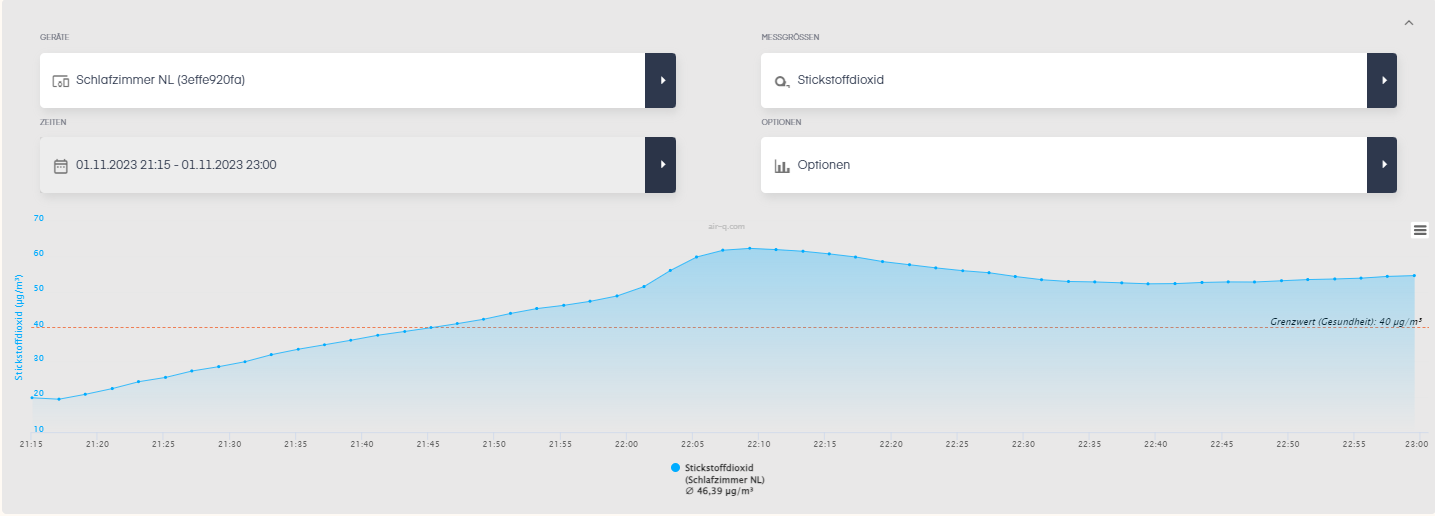
The pollutant nitrogen dioxide, which can worsen asthma and allergies, also rose noticeably during the test: from 19 to 62 µg/m³. The value first rose in a steady curve, peaked shortly after 10:00 p.m., and then flattened slightly – to about 55 µg/m³. The recommended threshold is 40, so the scented candles exceeded it by about one-third. Despite a slight drop from the peak, pollution never fell back below the threshold.
Conclusion
Scented candles noticeably affect indoor pollutant levels. A long-term effect over several hours can also be demonstrated. This shows that these decorative items are a source of pollutants. Besides particulate matter, VOCs, and nitrogen dioxide, the fragrances they contain can impair health and performance and even trigger or worsen allergies. With an air monitor like the air-Q, you can detect pollutants in your rooms and find out when thresholds are exceeded. Thanks to the intuitive LED traffic light and detailed analyses, you'll know when it's time to exchange the air in the room and which air pollutants are floating around.