
air-Q: Reliable Gas Alarm, Fire Alarm & Smoke Alarm in One Device
Do you cook with a gas stove or heat with natural gas or a fireplace? Then you should monitor your room air, since some gases are highly explosive. The air-Q air monitor can be used as a gas detector and fire detector. Read here how it works, which gases matter, and who the gas detector is recommended for.
Highly sensitive fire alarm & smoke alarm
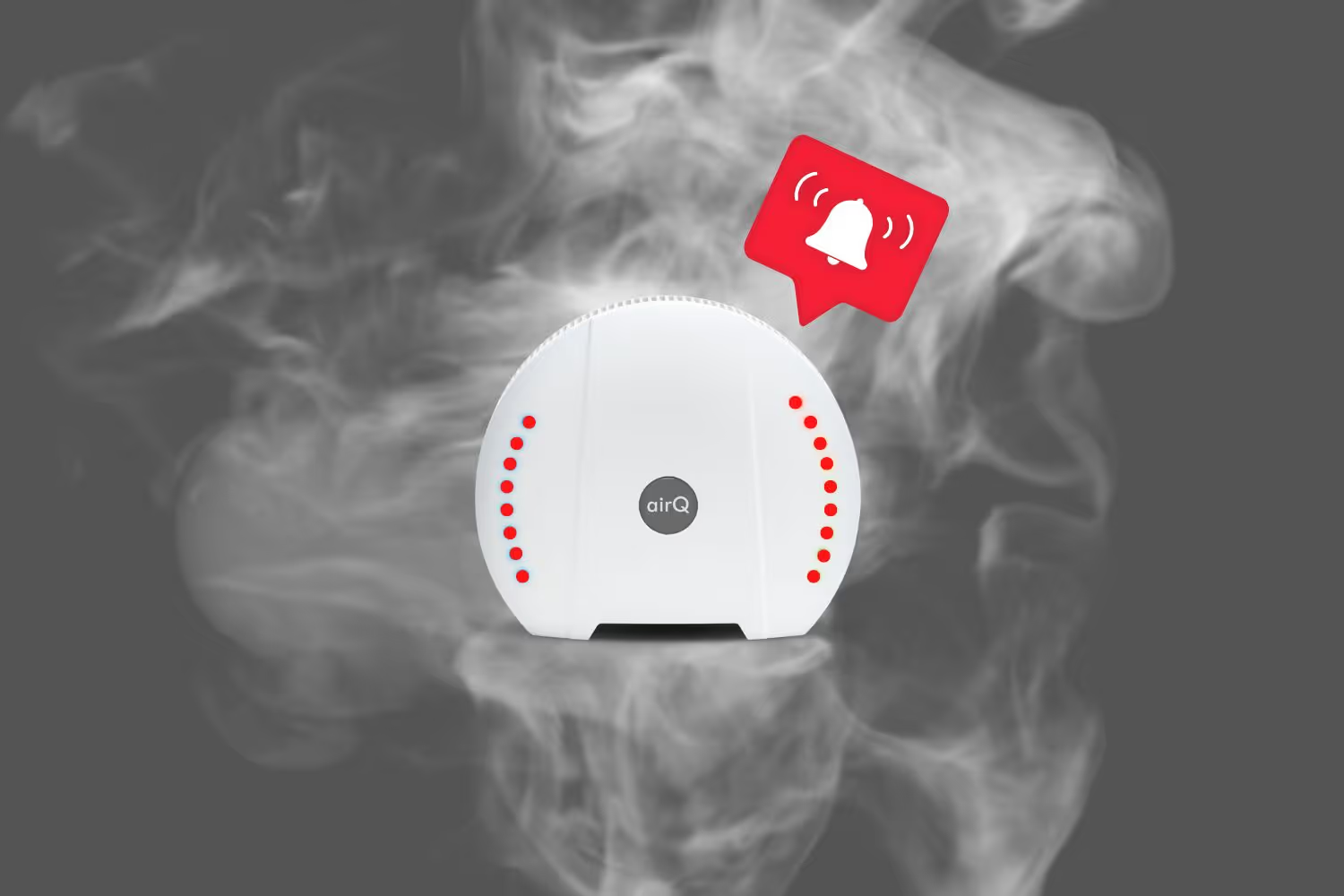
The air monitor air-Q measures various air components and features a built-in fire alarm (or smoke alarm). To do this, the smoke detector monitors relevant readings such as carbon monoxide, air temperature, and particulate matter across various particle sizes. If the predefined thresholds are exceeded, this triggers an audible and visual alarm on the fire detector: the smoke detector's LEDs flash red and the air-Q beeps clearly audibly. You can also receive the alarm as a push notification. This way, you're warned even while out and about if the fire alarm was triggered at home.
Since the air-Q reacts sensitively to room air developments, it warns you before a fire even breaks out. After all, it measures several air components that indicate a fire or increased smoke development, and can thus be used as a very fine and precise smoke detector. Note that while the air-Q is a sensible addition to a required fire detector, and as a fire detector even reacts more sensitively to relevant readings than ordinary smoke detectors, it does not legally replace one. The reason: legally required smoke detectors must, for fail-safety reasons, work independently of mains power, whereas the air-Q draws its power via a power cable and is therefore not battery-powered.
Tip: for more information about the air-Q as a smoke detector and gas detector, plus a detailed description of how the device can detect fire, smoke, and gas, see our topic page.
Comprehensive gas alarm that monitors various hazard sources
Gases can be tricky. They're often colorless and odorless, yet still dangerous. This means they can leak unnoticed, with devastating consequences, for example:
- via a leak or an undetected fault in a gas heating system or gas boiler,
- when heating with a fireplace or oil heating,
- when cooking or baking with a gas stove,
- using many electronic devices in one room,
- enjoying open flames such as candles.
If particles get into the surrounding air, this can have various effects: from health symptoms like nausea, reduced concentration, and headaches, to respiratory problems and shortness of breath, all the way to a gas explosion. With explosive gases, even a small spark is enough to ignite them. To prevent a gas explosion, you should monitor the gas concentration in your surrounding air with a gas detector. With a gas warning device like the air-Q, even colorless and odorless gases can be made "visible." Unlike single-gas detectors, the air-Q can be used as a multi-gas detector, since it can monitor several different gases simultaneously. Depending on the sensor, the gas warning device can check the following readings: oxygen, ozone, nitrogen dioxide, carbon monoxide, ammonia, chlorine & chlorine gas, hydrogen sulfide, sulfur dioxide, nitrous oxide, and methane.
The gas alarm built into the air-Q reacts extremely sensitively, triggering when critical thresholds are exceeded or undercut. Undercutting is especially important with regard to the oxygen contained in the air we vitally depend on. The gas detectors recognize when gas concentration in the air rises or falls and warn you accordingly. Via the gas warning device, you receive an audible and visual alarm, gaining valuable time to act and, for example, prevent a looming gas explosion. Here too, the alert can be configured as a push notification. See what the gas alarm sounds and looks like in the following video:
Who benefits from a gas detector & for which use cases is a gas alarm important?
Different gases are found in almost every home. In the overview below, we list the most important gases you should watch for and reveal where and when they occur.
- Methane: this gas is a main component of natural gas, a flammable gas mixture. Anyone heating with natural gas should keep an eye on this hazard source. Other hazard sources include, for example, gas-powered cooking while camping or a gas-powered garden grill.
- Carbon monoxide: this gas forms during incomplete, oxygen-poor combustion. This gas becomes relevant, for example, if you heat with gas, wood, or oil stoves, or use a gas-powered radiant heater.
- Oxygen: indoor oxygen levels are never constant — they're influenced by the number of people in the room, their activities, and even plants. If oxygen levels decrease, you should ventilate. Often, though, we don't notice when the air's oxygen content drops too much.
- Ozone: depending on sunlight exposure, more ozone can form. But operating electrical devices like printers can also increase the gas's concentration.
- Nitrogen dioxide: this substance is released when burning fossil fuels such as coal, gas, or oil. Indoors, open flames such as stoves, fireplaces, or candles are therefore the primary cause of nitrogen dioxide.
- Ammonia: ammonia forms the chemical basis for many substances and therefore occurs mainly in industrial contexts.
- Chlorine & chlorine gas: like ammonia, chlorine and chlorine gas occur more in industrial contexts. They're produced during chemical processes.
- Nitrous oxide: this anesthetic gas is used in operating rooms and medical practice settings. It should be monitored to protect staff.
- Sulfur dioxide: this is a decay gas produced during decomposition processes and is highly toxic.
.png)
To detect toxic and/or explosive gases and vapors in time, you need a sensitively reacting gas detector. We recommend using a multi-gas device and monitoring as many air components as possible in room air, rather than just a single reading. Since the air-Q lets you set alarms and push notifications for substances of your choice, you can keep selected gases under close watch.
(Cover image: air-Q/canva.com)