
Air Purifier vs. Air Quality Monitor – Do You Really Need Both?
Anyone wanting to improve indoor air quality needs to eliminate pollution from carbon monoxide and dioxide, particulate matter, or mold spores. Many people turn to air purifiers for this. But what do air purifiers really achieve? And: do I still need an air quality monitor alongside my air purifier to keep an eye on air quality? We answer these questions.
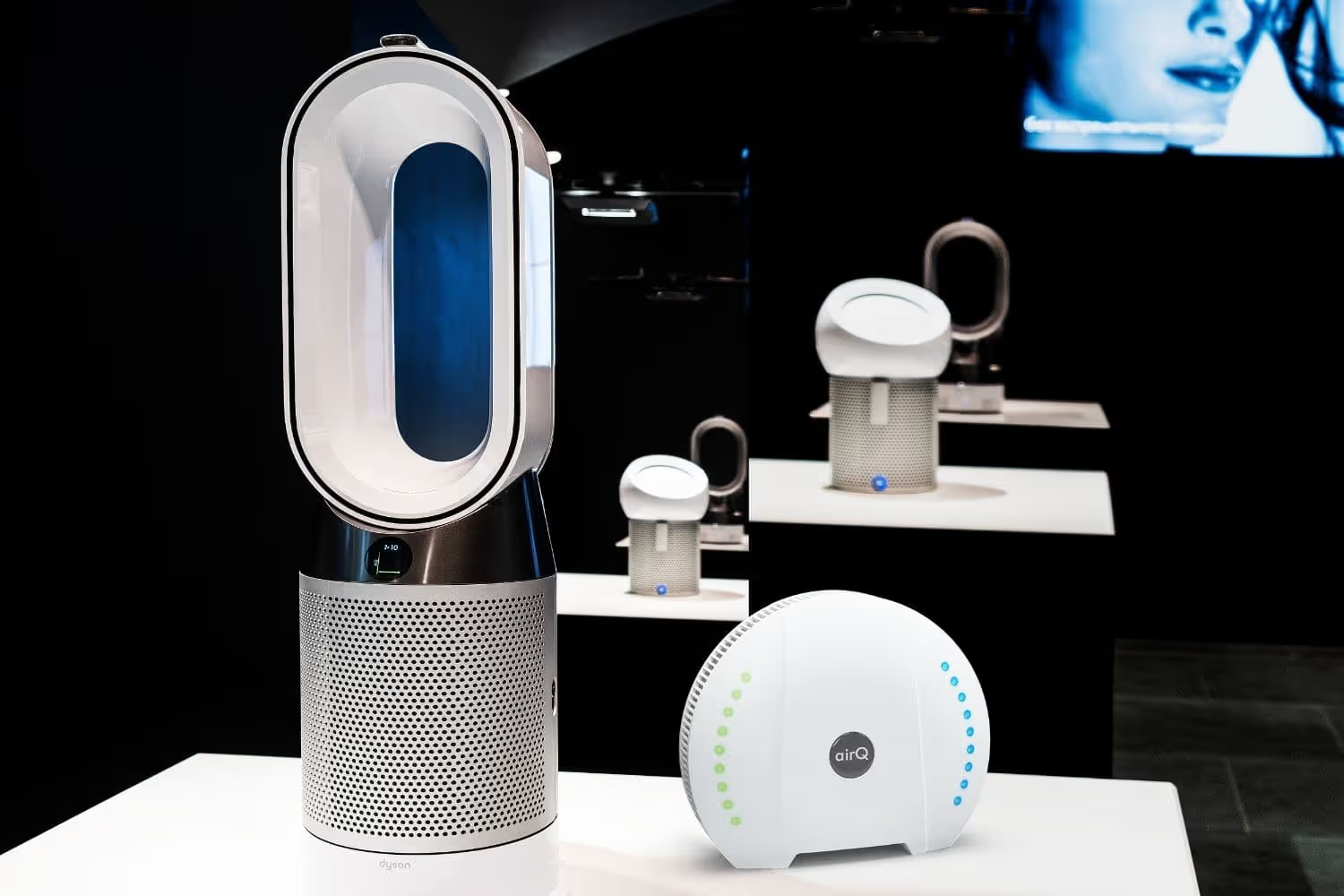
What can an air purifier do?
House dust, bacteria, viruses, mold spores, and pollen are things that should only be present in very small amounts in our ambient air. That's exactly what air purifiers are for. The devices filter room air, remove pollutants, and thus provide clean air. Used correctly, air purifiers can ease the effects of dust or pet hair allergies and help with, for example, hay fever. So the devices can detect poor air quality and start purifying the air, sensors are built in. These react to particulate matter (PM₁ – PM₁₀) as well as Volatile Organic Compounds VOC.
What does an air quality monitor do?
Even before the coronavirus pandemic, we placed value on the freshest possible room air. Every child knew that you should open the window during breaks in the classroom to let out the stale air. Indoor air quality monitors exist first and foremost to check the room air for pollutants precisely where people spend extended periods of time.
Indoor air quality monitors can certainly do more than measure particulate matter and VOCs: they provide information about many other air components such as temperature, humidity, and pollutants in a room. All these factors are important for what's known as a room's "feel-good climate." That's important not just in public spaces, but also within your own four walls.
Air quality monitors & smart home systems
With the ability to integrate air quality monitors into a smart home system, you also create a healthy and innovative home. Some air quality monitors send their readings to apps, so smart home systems from, for example, Apple, Google, or Amazon can use them. The devices can then be controlled via voice commands and linked with other smart home devices. For example, ask for readings via voice control, or have your air quality monitor use the data for your smart window openers, humidifiers & purifiers, fans, or even smart radiator thermostats and underfloor heating. If you combine all these technical options and supply the devices with a data basis thanks to the room air sensors, you set up an automatic system for controlling your indoor climate.
The air-Q sends its readings to its smart hub, the air-Q smartphone app. On your personal dashboard, you see your health index, the performance index, and get information on the individual readings: displayed in detail and clearly in charts. This way, you easily keep track of the air quality in your rooms.
Note: Even if you don't connect your air quality monitor to your smart home, you still receive digital notifications about air quality – on your smartphone or tablet.
An air purifier also has sensors to detect pollutants. Do I still need an air quality monitor?
Our recommendation: yes. The reason is obvious. Smart air purifiers do also offer automatic control, but this is usually based on just a single sensor value: VOC. However, there are far more air pollutants than that. That's why air quality monitors like the air-Q examine a wide range of readings. This gives you detailed information about air components and lets you control your air purifier far more effectively. Because you activate air purification not just with a single pollutant in mind, but many.
Readings the air-Q air quality monitor can check:
- Oxygen (O₂)
- Ozone (O₃)
- Absolute humidity (φ) & Relative humidity (ρ)
- Carbon monoxide (CO)
- Nitrogen dioxide (NO₂)
- Carbon dioxide (CO₂)
- Sulfur dioxide (SO₂)
- Particulate matter (PM₁ – PM₁₀)
- Methane (CH₄)
- Formaldehyde (CH₂O) or (HCHO)
- Radon (Rn)
- Volatile Organic Compounds (VOC)
- Air pressure (p)
- Peak noise level (Lp_max) & Noise (Lp)
- Hydrogen sulfide (H₂S)
- Hydrogen (H₂)
- Air temperature (T)
- Dew point (Td)
- Ammonia (NH₃)
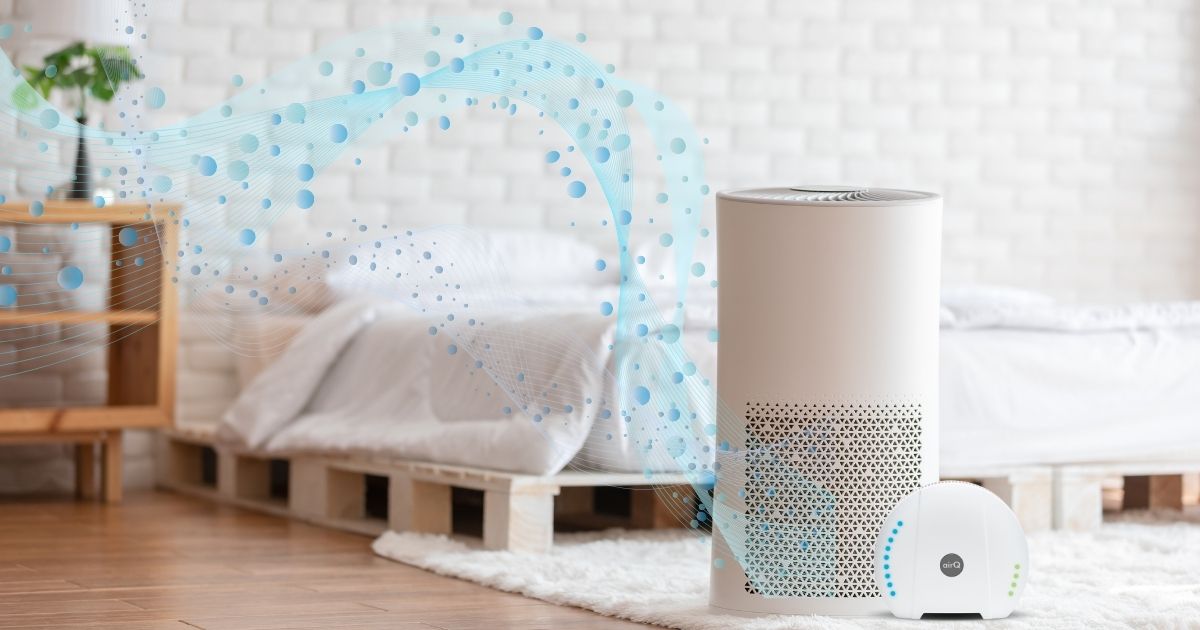
When you combine an air purifier and an air quality monitor, you can respond comprehensively to poor room air and improve air quality faster. By optimally controlling the air purifier, you also reduce its runtime, which in the best case leads to a longer filter lifespan.
(Cover image: Shutterstock/ Papin Lab; image: Shutterstock/ 220 Selfmade studio & Canva editing)