
Air Pollution & Hormonal Disorders: How the air-Q Air Analyzer Can Help With This Underrated Threat
Environmental pollution and air pollutants don't just affect the planet through climate change, they also affect the body. A link between environmental changes, pollutants, and hormone balance can be observed. We take a look at the effects and give tips on how to protect yourself from these invisible dangers.

The invisible dangers of air pollution to the endocrine system
Air pollution is a global problem that affects our health in many ways. Air pollutants don't just affect our lungs when we breathe, they can also disrupt the delicate balance of our hormones. This is accompanied by a wide range of health problems.
The endocrine system encompasses all the hormones in our body and uses them to control everything that happens within it. Hormones determine our development, our mood, and thus our reactions to external influences, but also the female cycle, digestion, stress levels, or our blood pressure. Chemicals known as endocrine disruptors disrupt the hormone system. Whether fertility disorders, susceptibility to diseases like cancer, or a weakened immune system: endocrine disruptors throw the delicate hormonal balance off.
Environmental hormones & their effect on the organism
Besides the body's own hormones, there are environmental hormones, which aren't actually hormones in the true sense. Rather, they are molecules that behave like hormones. The problem is that these disruptive factors occur everywhere: in cleaning products, food, chemicals, pesticides, medications, cosmetics, and more. They off-gas from plastic, furniture, or decorative items and accumulate in the air, soil, or water. Since the molecules are very small, they enter the bodies of animals and humans through breathing, but also through the skin. There, they can interfere with the hormone system.
Environmental hormones can act in different ways. Some mimic the body's own hormones. When the organism detects these imitators, the body's own production of the hormone in the hormone glands is throttled. Others block docking sites in cells or occupy transport molecules, thereby switching off the body's own hormones.
Other environmental hormones attack enzymes needed to form hormones. This can also slow the breakdown of hormones, causing the hormone concentration, for example of estrogen, to rise, which in this case can lead to feminization. Even tiny amounts of an environmental hormone are enough to disrupt the hormone system.
The hormone-like effect of substances is often only uncovered through disruptions – meaning after substance groups have already acted on the hormone system. As a rule, the substances in question, such as the plasticizer Bisphenol A in plastic or phthalates, are then banned, restricted for certain uses, or given limit values.
Pollutants & their effects on the hormone system
Pollutants like sulfur oxides, nitrogen oxides, carbon monoxide, and lead, which enter the air through the combustion of fossil fuels and vehicle emissions, can, alongside their direct effects on our respiratory system, also act as endocrine disruptors. Bisphenol A (BPA), which is used in hardening plastic, is considered one of the most influential hormone disruptors. According to several studies, BPA resembles estrogen, both visually and in its effect. This can particularly confuse the organism and affect hormones. BPA is suspected of triggering fertility problems as well as breast cancer and other diseases like thyroid disorders or diabetes.
The substances mentioned can disrupt hormone production, affect our bodily functions, and lead to disease.
Can environmental pollution affect hormones?
Yes, for example in the form of air pollution. If the ambient air is heavily enriched with pollutants like endocrine disruptors, these enter the lungs through breathing and from there travel via the bloodstream to other organs. Both women and men are equally affected. If various hormones are repeatedly released due to air pollutants, this puts the body under constant stress. Sustained hormone flooding can ultimately lead to inflammation, for example of the liver or pancreas.
The risks of particulate matter & nanoparticles
Particulate matter, a complex mixture of solid particles and liquid droplets that come from, among other things, combustion processes or construction sites, can have far-reaching effects on health. The dust particles can not only trigger inflammatory reactions throughout the body but also cause hormonal disorders. Even smoke from wildfires, which contains other pollutants besides particulate matter, can affect people living far away.
But it's not just the dust itself that's hazardous to health, it's primarily the particles that attach to it. Allergens or chemical particles bind to it and can trigger reactions such as allergies or hormonal changes in the body.
Diagnosis & treatment of air-pollution-related illnesses
Diagnosing illnesses caused by air pollution is a complex process. It's based on medical history, environmental exposure, symptoms, and the results of lung function tests. It's often difficult to establish a clear connection between exposure to a particular pollutant and the development of symptoms or illnesses. Be sure to talk to a specialist about this, who can advise you thoroughly based on the appropriate examinations.
The role of the air-Q air analyzer in preventing air-pollution-related illnesses
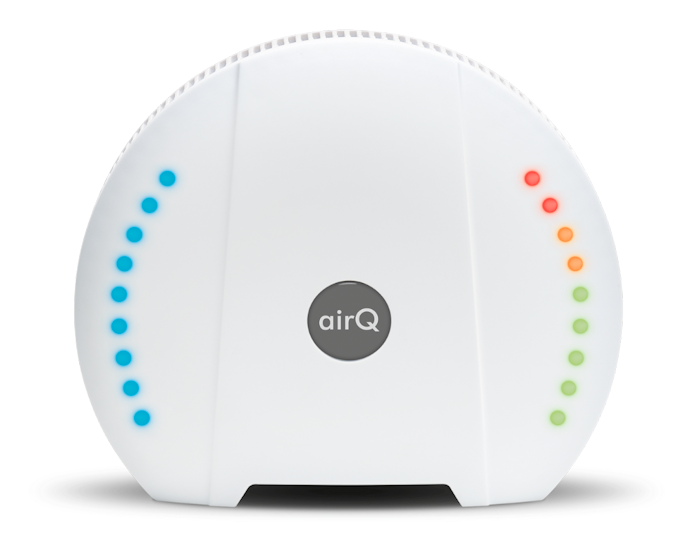
This is where the air-Q air analyzer comes into play for prevention. This modern air quality monitor is able to detect and quantify a wide range of pollutants in the air. Among other things, you can use the air-Q to measure pollutants like VOCs (Volatile Organic Compounds) or particulate matter.
Proactive steps to improve air quality with the air-Q air analyzer
Through continuous monitoring of indoor air quality, the air-Q air analyzer helps you reduce exposure to pollutants. Based on data, you learn when you should take action to improve air quality, such as optimizing ventilation, reducing indoor emissions, or using air purifiers. If the sensitive sensors of the air quality monitor detect that recommended limit values are being exceeded, the air-Q warns you via an LED strip and optionally via push notification. This lets you respond to changes in air quality as they happen and stay in control.
Conclusion: knowledge is power – understanding air quality & acting accordingly
Ultimately, the best defense against the health effects of air pollution is extensive knowledge. With air quality monitors like the air-Q, you gain a better understanding of what's in the air you breathe and can take proactive steps to improve health and well-being.