
How Do Air Conditioners Affect Indoor Air Quality?
Air conditioners provide pleasant temperatures, but at the same time affect indoor air quality. This article explains how air conditioners can change humidity, CO₂, and pollutants, what health risks arise, and how air quality can be reliably monitored.

Pleasantly cool, or an invisible risk?
Air conditioners have long been part of everyday life in many offices, homes, hotels, or vehicles. Especially on hot summer days, they provide more pleasant temperatures and can significantly improve well-being. At the same time, many people report dry eyes, headaches, irritated airways, or a feeling of "stuffy" air despite a running air conditioner.
That's because air conditioners don't just change the temperature. They affect the entire indoor air quality and thus also health, concentration, and well-being.
Whether an air conditioner improves or worsens the air depends primarily on how it's operated and maintained. Modern systems can reduce pollutants and stabilize the indoor climate. Poorly maintained systems, on the other hand, can become a burden themselves. People get themselves a technical cooling system against the summer heat and then forget to clean it.
How does an air conditioner change indoor air?
An air conditioner removes heat from indoor air and transports it outside. At the same time, the air is usually dehumidified and permanently recirculated. This changes several factors of indoor air simultaneously.
This especially affects temperature and humidity. While cooler air is initially perceived as pleasant, permanently dry air can irritate the mucous membranes and burden the airways. Especially in strongly air-conditioned offices or bedrooms, many people notice dry eyes or a scratchy throat as a result.
In addition, many air conditioners mainly recirculate the existing indoor air instead of continuously supplying fresh air. This can cause CO₂, odors, or volatile organic compounds to accumulate in the room, even though the temperature stays pleasant. Cool doesn't automatically mean fresh.
Can air conditioners improve air quality?
Under certain conditions, air conditioners can indeed improve air quality. Well-maintained systems with high-quality filters can even improve indoor air. Modern filter systems remove, for example, dust, pollen, or particulate matter particles from the air and can thus especially relieve allergy sufferers.
Regulating humidity can also have advantages. In damp rooms, an air conditioner reduces excess moisture and can thus lower the risk of mold formation. This plays an especially important role in modern, tightly insulated buildings.
In addition, a pleasant room temperature often improves concentration and performance. High temperatures burden the body, promote fatigue, and worsen sleep quality. Modern cooling can therefore be especially useful in offices or bedrooms.
What health risks can arise?
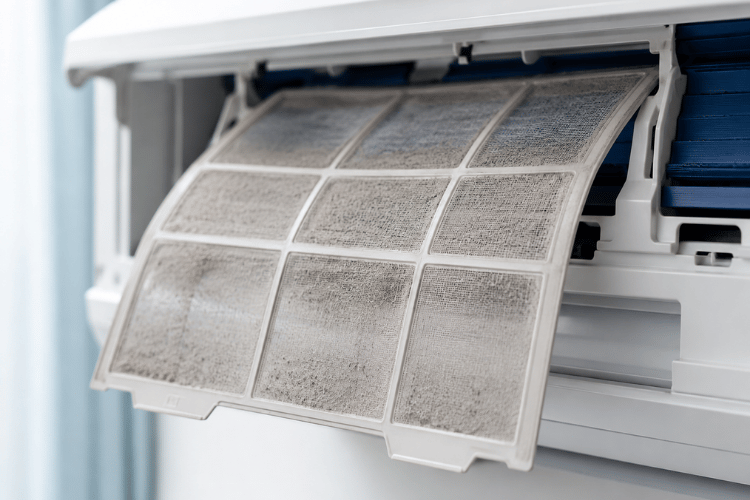
Problems arise especially when air conditioners are poorly maintained or improperly set. Dirty filters and damp components offer ideal conditions for bacteria, mold, or other microorganisms. These can subsequently be spread throughout the room via the air.
The consequences range from unpleasant odors to irritated airways, coughing, or allergic reactions. Especially sensitive people often react more quickly to polluted indoor air. Headaches, fatigue, or concentration problems can also be intensified by poor air quality.
Another problem is the often too-low humidity. Air conditioners remove moisture from the air, which can dry out the mucous membranes. This not only impairs well-being, but can also weaken the natural protective function of the airways.
In addition, many people underestimate the CO₂ exposure in air-conditioned rooms. If hardly any fresh air is supplied, CO₂ concentration often rises significantly despite the running system. The air then feels heavy or stuffy, even though the room stays cool. This is especially noticeable in meeting rooms, bedrooms, or open-plan offices.
Why poor air often goes unnoticed for a long time
What's tricky about indoor air is its invisibility. People often only notice late that air quality is poor. Fatigue is blamed on stress, headaches on too little fluid, or dry eyes on screen work. Yet indoor air often plays a much bigger role than assumed.
Air conditioners in particular quickly convey a feeling of "fresh" air, since the room feels pleasantly cool. In reality, however, pollutants or CO₂ can accumulate in the room at the same time. Temperature alone says little about actual air quality.
How can air quality be improved?
Regular maintenance of the system is especially crucial. Filters should be cleaned or replaced so that pollutants or microorganisms don't accumulate. In addition, regular ventilation remains important, even if an air conditioner is present.
Monitoring humidity is likewise sensible. Values between about 40 and 60 percent are considered pleasant for humans and simultaneously reduce the risk of mold or overly dry air.
Since many changes aren't directly perceptible, continuous measurement of indoor air also helps.
Monitoring indoor air with the air-Q
With the air-Q, you can make visible how an air conditioner actually affects indoor air. The device measures numerous relevant air parameters in real time, including CO₂, particulate matter, humidity, temperature, and volatile organic compounds.
This makes it apparent whether the air is getting too dry, whether CO₂ is rising despite the air conditioner, or whether pollutants might be present in the room. Users can react early, ventilate specifically, or detect maintenance problems before health complaints arise.
Especially in offices, bedrooms, schools, or modern residential buildings, the air-Q helps objectively assess indoor air instead of relying solely on subjective feeling.
Conclusion
Air conditioners can both improve and worsen indoor air. Well-maintained systems increase comfort, reduce moisture, and can filter pollutants. Poorly maintained systems, on the other hand, promote dry air, spread germs, or cause elevated CO₂ levels.
Since many problems initially go unnoticed, regularly monitoring indoor air is worthwhile. With an air quality monitor like the air-Q, it becomes visible how the air conditioner actually affects indoor air and when action is needed.