
8 Tips to Improve Your Indoor Climate - Without an Expensive Air Purifier
When the air in your own home is stuffy and it's hard to breathe, it takes a toll on body and mind. Difficulty concentrating, headaches, sleep problems, and more are often the result. That's why a pleasant indoor climate is so important. This article offers 8 tips for an optimal indoor climate without an air purifier.
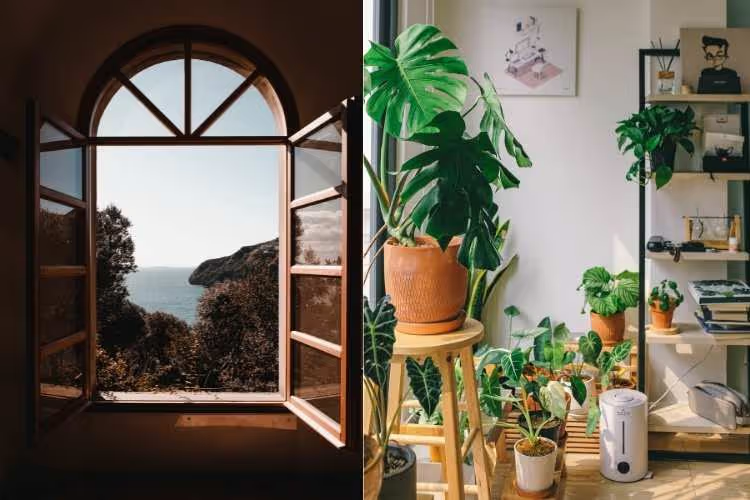
When the air in your own home is stuffy and it's hard to breathe, it takes a toll on body and mind. Difficulty concentrating, headaches, sleep problems, and more are often the result. That's why a pleasant indoor climate is so important. In this article, we explain which factors matter and give you tips for achieving a feel-good climate without expensive air purification devices.
What matters for a feel-good indoor climate?
The following four criteria must be considered for a good indoor climate:
- Fresh air supply: Stuffy, stale air is harmful to health in the long run and also frequently leads to mold growth.
- Suitable humidity: Excessive humidity likewise promotes mold and moisture damage, while too little humidity causes issues like irritated mucous membranes, chapped skin, or dry eyes.
- Comfortable room temperature: The right temperature is especially important for individual well-being and health.
- High air quality: Ideal air composition contains enough oxygen and as few pollutants as possible (such as ammonia, benzene, or formaldehyde).
Only when all four factors work together does a pleasant indoor climate emerge, one in which you can truly feel comfortable and relax. But how do you make sure all the criteria are met?
8 tips for improving air quality
1. Ventilate correctly
Getting into the habit of ventilating correctly helps in several ways at once: it ensures regular air exchange, reduces excessive humidity, and achieves better air quality. The ideal approach is regular burst ventilation: open all windows completely and let the air flow through.
In summer months, this can be about 20 to 30 minutes; in winter, it's better to keep it to just 5 to 10 minutes. Afterward, close all windows completely. Repeat this about 3 to 4 times a day. Unlike permanently tilted windows, this air exchange is much more effective, and on top of that, you save on expensive heating costs in winter.
2. Bring more greenery into your living space
Green plants are the most natural option to improve your indoor climate. They increase humidity, produce oxygen, and bind all kinds of pollutants from indoor air. A few suggestions:
• The peace lily is lovely to look at with its white blooms and, at the same time, a diligent air purifier.
• Low-maintenance aloe vera thrives on a sunny windowsill and binds dust from the air there.
• Various indoor ferns are decorative and useful at the same time.
• Ivy not only beautifies the room with its playful tendrils but also filters numerous pollutants, e.g. mold spores.
• Snake plant is perfect for the bedroom, since it absorbs CO2 at night.
• Also popular are palm-like dragon trees – however, avoid them if you have children or pets in the household, as the plants are considered mildly toxic.
Tip: If you don't have a green thumb, you can instead use humidifiers, indoor fountains, or similar devices to balance humidity.
%2520(800%2520%25C3%2597%2520200px).png)
3. Pay attention to the right temperature
For your home to become a feel-good environment, the temperature needs to be right too. Finding the ideal room temperature, however, isn't so simple. After all, everyone has their own personal comfort temperature. With multiple household members, disagreements aren't uncommon.
Still, some basic rules can be set: the bathroom is usually warmer so you don't get cold after bathing or showering. The kitchen, on the other hand, can be cooler since it tends to heat up on its own while cooking. A cooler temperature is also recommended for sleeping. Approximate guideline values are listed below:
• Living rooms: 20-23°C
• Bedroom: 16-18°C
• Kitchen: 18-20°C
• Bathroom: 22-23°C
4. Remove dust regularly
For good air and a good indoor climate, it also helps to reduce household dust exposure. This includes regular dusting and vacuuming. The more people or pets live in the household, the more often dust removal is needed. For allergy sufferers, a special allergy filter in the vacuum cleaner is a good idea, so as little residual dust as possible spreads through the room.
5. Wet-clean carpets and upholstered furniture
Dusters and vacuum cleaners are effective, but they only remove the surface layer of dust. To further reduce dust exposure, wet cleaning is also needed. Household dust settles particularly well in textiles, so carpets and upholstered furniture should be wet-cleaned at least twice a year. This removes all dust particles and pollutants so they can no longer get into the indoor air.
6. Avoid aggressive cleaning products
When cleaning, it's a good idea to rely on natural cleaning products. That's because the chemicals in conventional cleaners also pollute indoor air. On top of that, they're real environmental offenders. Sustainable cleaning with eco-friendly alternatives pays off in multiple ways.
Another tip: while cleaning is a good time to ventilate thoroughly. That way, any chemicals or pollutants from the cleaning product don't linger in the indoor air.
7. Use natural room fragrances
Of course, you want your home to smell pleasant. But covering up stale indoor air with artificial air fresheners isn't the best strategy. It's better to clean regularly and ventilate thoroughly several times a day – then additional fragrances aren't even necessary.
If you still don't want to go without them, choose room fragrances with natural ingredients: flowers, herbs, essential oils, and similar items can even be beneficial for your health in moderation.
8. Measure air quality
If you really want to be 100% sure that your indoor climate is always perfectly balanced, you should measure air quality professionally. A high-quality measuring device can monitor factors such as air composition, humidity, temperature, particulate matter levels, and more for you. This way you know exactly where you can still make improvements. Nothing stands in the way of your personal feel-good climate!
Conclusion: many small measures add up to the perfect indoor climate
For you to breathe easy at home, good air and a pleasant indoor climate are essential. And you don't necessarily need expensive air purification devices for that: the tips presented here are easy to implement in everyday life and create a feel-good climate within your own four walls.
Many thanks to heatness for this guest article.