
Silan (SiH₄)
Kann gemessen werden mit:
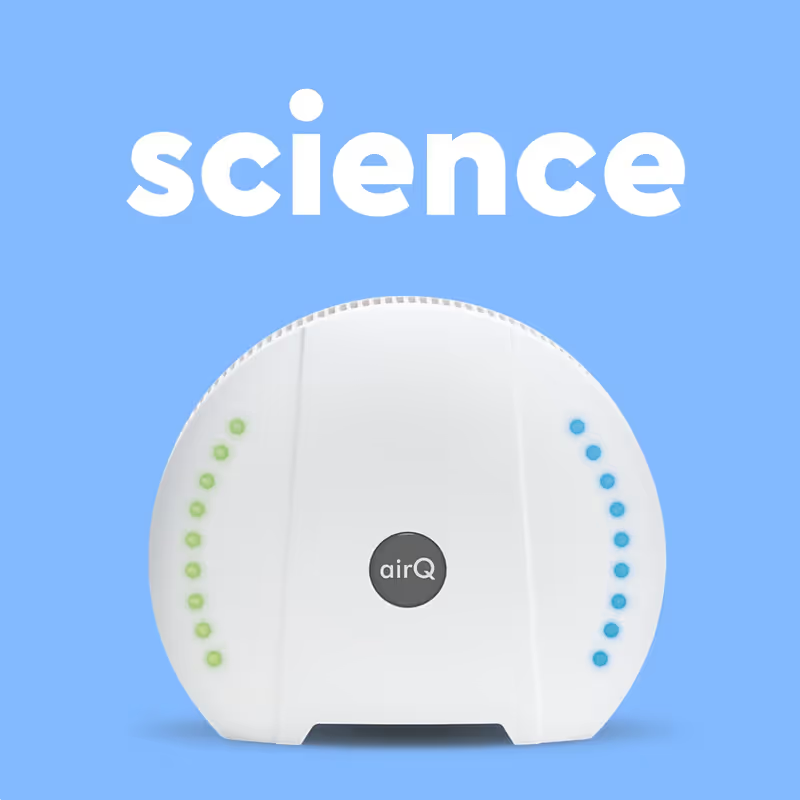
✓ messbar mit dem air-Q Science auf Anfrage.
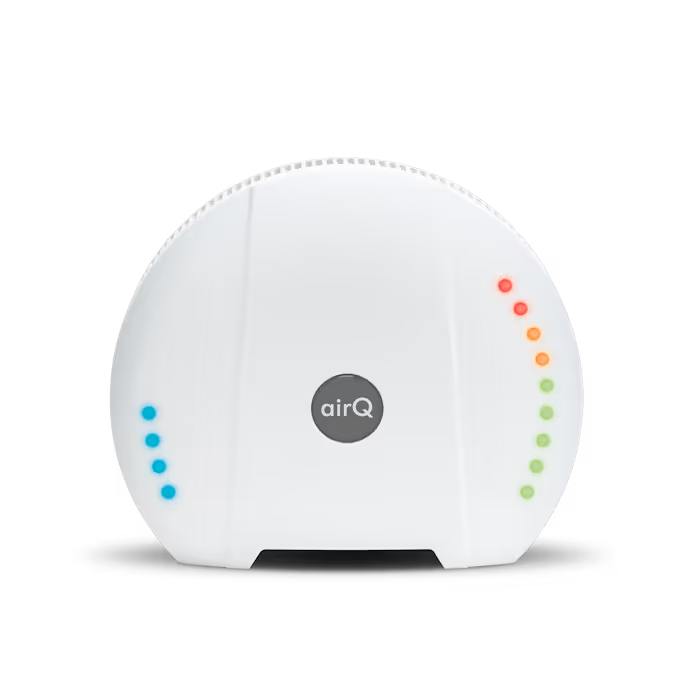
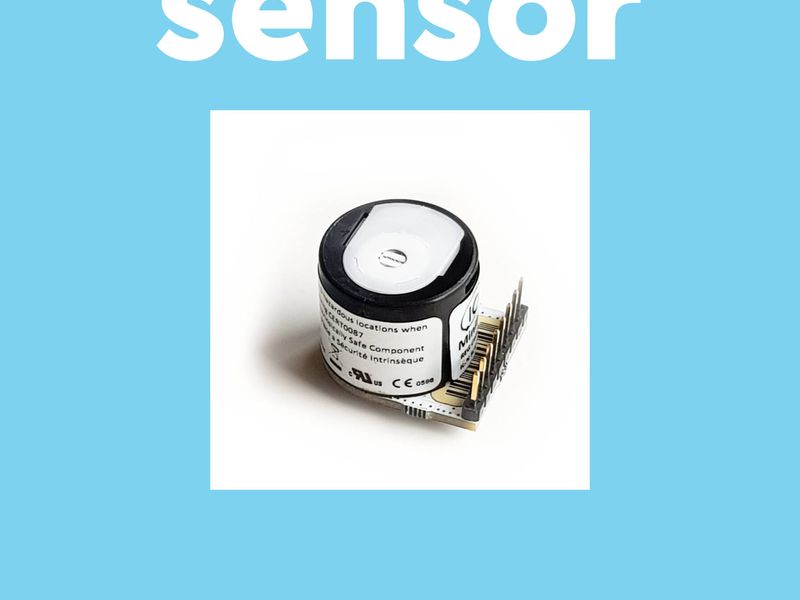
air-Qs, mit Sensor für Silan
Entstehung/Vorkommen:
Technische Herstellung; CVD‑Prozesse, Dünnschicht‑Solarzellen.
Grenzwerte:
Arbeitsplatzgrenzwerte bestehen; primäre Gefahr ist spontane Entzündung/Explosion.
Folgen:
Verbrennungs‑/Explosionsgefahr; Inhalation von Zersetzungsprodukten reizt die Atemwege.
Sicherheit:
Inertgas‑Spülungen, Abgasverbrennung/‑Waschung, Leckdetektion.
Weitere Messwerte / Sensoren
indiv. Sensor indiv. Sensor Infraschall Infraschall H₂ Wasserstoff VOC Flüchtige Organische Verbindungen C₄H₈S Tetrahydrothiophen T Lufttemperatur Td Taupunkt NO Stickstoffmonoxid NO₂ Stickstoffdioxid SiH₄ Silan H₂Se Selenwasserstoff H₂S Schwefelwasserstoff SO₂ Schwefeldioxid O₂ Sauerstoff Rn Radon C₃H₆ Propen COCl₂ Phosgen O₃ Ozon PH₃ Monophosphan CH₄S Methanthiol / Methylmercaptan CH₄ Methan Merlins Teststoff Merlins Teststoff ρ Relative Luftfeuchtigkeit φ Absolute Luftfeuchtigkeit p Luftdruck lx Licht / Beleuchtungsstärke Lp_max Lärm Maximalwert Lp Lärm N₂O Lachgas (Distickstoffmonoxid) CO Kohlenmonoxid CO₂ Kohlendioxid C₄H₁₀ Isobutan PID Industrieller VOC Sensor N₂H₄ Hydrazin CH₂O Formaldehyd HF Fluorwasserstoff F₂ Fluor Feinstaub Partikel Count Feinstaub Partikel Count PM₁ – PM₂,₅ – PM₁₀ Feinstaub C₂H₄O Ethylenoxid C₂H₆ Ethan B₂H₆ Diboran ClO₂ Chlordioxid Cl₂ Chlor / Chlorgas C₄H₁₀ Butan HBr Bromwasserstoff Br₂ Brom HCN Blausäure AsH₃ Arsenwasserstoff NH₃ Ammoniak Alkohole Alkohole